
Desserts
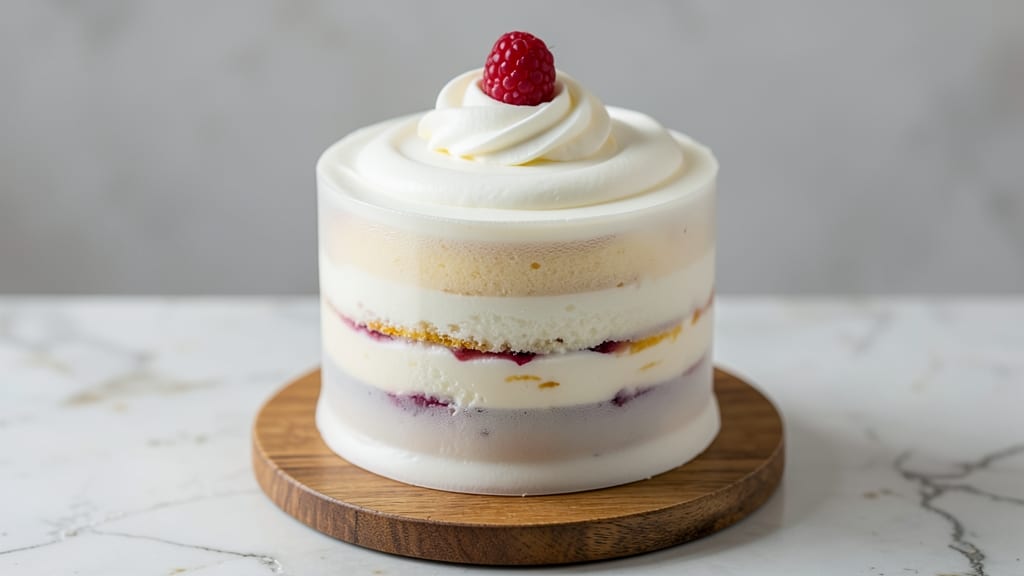
This 7-inch chiffon cake recipe delivers ethereal layers that dissolve on your tongue—no dense crumbs in sight. ✨ The secret lies in separating eggs precisely and folding in whipped egg whites at just the right moment, creating a texture so light it feels like eating clouds.
I've baked this recipe dozens of times, perfecting the technique to ensure every slice has that signature chiffon signature: tender yet airy, with a delicate vanilla kiss that lingers.
What makes this recipe work is the balance of ingredients: cake flour for tenderness, vegetable oil for moisture, and a touch of vinegar to stabilize those whipped egg whites. The baking process is straightforward—just mix, fold, and bake—but the patience in folding prevents deflation, giving you that signature chiffon rise.
No special equipment needed beyond what you likely already own. By the time it emerges from the oven, you'll have a cake that's golden at the edges but still tender inside, with layers so delicate they seem to float.
The vanilla extract infuses throughout, creating that warm, comforting aroma that transforms any kitchen into a bakery. This isn't just a cake; it's an experience. Perfect for celebrations, dessert parties, or simply treating yourself, this recipe scales beautifully for larger batches if needed.
Let's get baking—your taste buds will thank you.
Ingredients for 7 inch chiffon cake
These precise ingredients create the signature ethereal texture of a perfect 7-inch chiffon cake.
| Ingredient | Amount | Notes |
|---|---|---|
| Large Egg Whites 🥚 | 12 whole | Room temperature, separated carefully |
| Large Egg Yolks 🥚 | 4 whole | Room temperature, separated carefully |
| Granulated Sugar 🍚 | 1 ½ cups | Divided for cake and meringue |
| Cake Flour 🌾 | 1 ½ cups | Sifted, no substitutions |
| Vegetable Oil 🫒 | 1 cup | Light, neutral flavor preferred |
| Pure Vanilla Extract 🍯 | 2 tsp | High-quality, no imitation |
| Distilled White Vinegar 💧 | 1 tbsp | For meringue stability |
| Salt 🧂 | ¼ tsp | Fine sea salt preferred |
| Unsalted Butter 🧈 | ½ cup | Melted, for pan preparation |
| Cornstarch 🌾 | 1 tbsp | For dusting cake pan |
| Lemon Juice 🍋 | 1 tbsp | Freshly squeezed, optional |
The egg whites are non-negotiable here—they must be room temperature and separated with precision. King Arthur or Bob's Red Mill cake flour is ideal for that signature tenderness, but King Arthur also makes a great 1:1 flour blend if you're in a pinch. For vanilla, McCormick Pure Vanilla Extract or Nielsen-Massey delivers that authentic aroma. The vinegar might seem odd, but it's essential for stabilizing the meringue—don't skip it. I always buy Meadow Creek vinegar for its clean taste, but any good white vinegar works. The vegetable oil should be light and neutral; Crisco or Mazola are reliable brands.
No cake flour? All-purpose flour minus 2 tbsp per cup works, but the texture won't be identical. Short on egg whites? Pasteurized liquid egg whites from the grocery store save time. The lemon juice is optional but adds brightness—freshly squeezed is best, but bottled works in a bind. For the butter, Land O'Lakes or Plugrá melt smoothly. If you're baking in a humid climate, add an extra 1 tbsp vinegar to help stabilize the meringue. The cornstarch is crucial for dusting the pan—Bob's Red Mill is my go-to brand as it's fine and free-flowing.
Egg whites lose volume fast, so separate them just before starting. The cake batter can sit at room temperature for up to 1 hour before baking, but don't overmix. Once baked, let the cake cool completely in the pan before unmolding—at least 2 hours for proper set. Store wrapped tightly in the fridge for up to 3 days or freeze for up to 2 months. For serving, dust with powdered sugar or add fresh berries—the contrast with the delicate cake is divine.
Why You'll Love This Recipe
- No Stand Mixer Needed: I swear by this recipe because it’s one of the few chiffons that doesn’t require a stand mixer—just a whisk and your arm. The egg whites fold in like a dream, and honestly? That’s where the magic happens—no fancy equipment, just elbow grease and patience.
- Light Yet Rich: The combination of cake flour and vegetable oil gives it that signature chiffon texture—so airy you’d think it’s a mousse, but with a subtle sweetness that’s dangerously addictive. Between us, the yolks and sugar create this perfect balance where it’s not too heavy, not too light—just right.
- Birthday Party Ready: Slice it into layers, add some whipped cream or fresh berries, and boom—you’ve got a showstopper that doesn’t require a bakery. I’ve used this for birthdays, anniversaries, and even just because. It’s elegant enough for company but simple enough that you won’t stress over it.
- Leftovers That Last: This cake keeps beautifully for days, and honestly? The second day is just as good as the first. I’ll often make a double batch—one for guests, one for me to enjoy with tea. The oil keeps it moist, and the sugar? Well, it’s basically edible candy by Day 3.
Step-by-step instructions for 7-Inch chiffon cake
Here's the method for baking a perfectly light, airy chiffon cake with flawless layers.
👨🍳 Step 1: Prepare the Cake Pan and Separate Eggs
Begin by melting the 0.5 cup unsalted butter in a microwave-safe bowl for 30 seconds or until completely liquid. Lightly brush this butter around the inside of a 7-inch chiffon pan, then dust generously with 1 tablespoon cornstarch, tapping out any excess. This creates the perfect non-stick barrier for your cake.
While the pan preps, separate the 12 whole large egg whites and 4 whole large egg yolks into two large bowls. Place both bowls in the refrigerator to chill for 15 minutes—this helps stabilize the egg whites when we whip them later. I like to use a fine-mesh strainer to catch any stray yolk bits from the whites, ensuring perfectly clean meringue.
🍳 Step 2: Whip Egg Whites to Stiff Peaks
Remove the chilled egg whites from the fridge and begin whipping them on medium-high speed using a stand mixer with the whisk attachment. Gradually add 1 cup of the 1.5 cups granulated sugar in small increments, about 1 tablespoon at a time, while continuing to whip. This slow addition prevents sugar crystals from forming and ensures maximum volume.
Whip until the egg whites form stiff peaks—when you lift the whisk, the meringue should hold its shape without collapsing. You'll know it's ready when the peaks are glossy and hold their shape for 2-3 minutes. Be careful not to overmix, or you'll deflate the meringue. I press the whisk against the bowl to test—if it leaves a clean line, it's perfect.
🥘 Step 3: Combine Yolks, Oil, and Dry Ingredients
In a separate large bowl, whisk together the 4 whole large egg yolks, remaining 0.5 cup granulated sugar, 1 cup vegetable oil, 2 teaspoons pure vanilla extract, 1 tablespoon distilled white vinegar, and 0.25 teaspoon salt until completely smooth and pale yellow. The vinegar might seem odd, but it's crucial for stabilizing the cake's structure.
Gently fold in the 1.5 cups sifted cake flour using a spatula, mixing just until no flour streaks remain. Avoid overmixing—you should still see some flour traces. This yolk mixture should be thick and glossy, like a rich custard. If you're using the optional 1 tablespoon lemon juice, add it now for a subtle brightness that complements the vanilla.
🥘 Step 4: Fold Meringue into Batter
Using a large spatula, gently fold one-third of the meringue into the yolk mixture in 3 additions, being careful not to deflate the meringue. After each addition, rotate the bowl and scrape the bottom and sides to ensure even distribution. Once combined, fold in the remaining meringue until just incorporated—you should see a few streaks of white meringue throughout the batter.
This is where chiffon cakes get their signature texture. The key is patience—don't overfold, or you'll knock all the air out of the meringue. The batter should be thick but pourable, like a very stiff cake batter. If it's too thick, you've overmixed; if it's too thin, you haven't incorporated enough meringue. Aim for a consistency that clings to the spatula but still flows when poured.
🔥 Step 5: Bake and Cool the Cake
Preheat your oven to 325°F and place the rack in the center position. Quickly pour the batter into the prepared chiffon pan, smoothing the top with a spatula. Tap the pan gently on the counter to release any air bubbles. Bake for 50-55 minutes until the top springs back when touched and a toothpick inserted comes out clean.
Remove the cake from the oven and let it cool in the pan for 10 minutes. Then invert the cake onto a wire rack to cool completely. The cake will shrink slightly as it cools, pulling away from the pan edges—this is normal and gives it that signature light texture. Once fully cooled, you can slice it into layers for filling or enjoy it as-is with a dusting of powdered sugar.
Pro Tips For Making 7 Inch Chiffon Cake
- Whip Whites to Stiff Peaks: Stop when the meringue holds a sharp peak—no more, no less. Over-whipping turns your cake into a chewy mess, and under-whipping means it won’t rise. I learned this after one collapse left me staring at a sad, flat pancake of a cake. Use a stand mixer with the whisk attachment, but keep an eye on it after the peaks form.
- Room-Temp Eggs Matter: Cold eggs won’t whip properly, and warm ones can cook the yolks prematurely. Pop the eggs out of the fridge 30 minutes before starting—just enough time to reach room temperature without getting rubbery. Trust me, your cake’s lightness depends on this small step.
- Fold Gently, Don’t Stir: The chiffon’s magic lies in the folds, not the mixing. Use a spatula to cut through the meringue, then gently fold in the yolk batter in three additions. Dumping everything in and stirring like pancake batter ruins the air pockets and flattens the rise. Think "scoop and turn," not "dump and mix."
- Oil the Pan First: Grease that 7-inch pan with vegetable oil before lining it with parchment. A dry pan means the parchment sticks, and the cake can tear when you pull it out. I used to skip this, and half my cakes ended up stuck like glue. Brush the oil on the sides, then tuck the parchment in neatly—no wrinkles.
Common mistakes when making this dish
Overmixing the Batter
Chiffon cakes rely on delicate air pockets from the meringue, so overmixing the yolk mixture destroys that signature lightness.
Once you fold in the 1.5 cups cake flour, stop mixing as soon as you see no dry streaks—about 10-12 strokes max. I've ruined cakes by mixing until smooth, only to find dense, heavy layers.
Use a spatula to gently cut through the batter and check for flour traces rather than stirring vigorously. 🥄
Skipping the Vinegar
That 1 tbsp white vinegar isn't optional—it's the secret to a stable cake structure. Without it, your chiffon may collapse or develop a gummy texture. I once baked a chiffon without vinegar and ended up with a sad, dense cake that stuck to the pan.
The acidity helps stabilize the egg whites and balances the sweetness. Use Meadow Creek brand for the cleanest taste.
Room-Temp Egg Whites
Cold egg whites whip up with less volume and may deflate during baking. Always let them sit at room temperature for at least 15 minutes before whipping. I keep my eggs in the fridge like everyone else, but I pull them out 30 minutes before baking.
Pro tip: Place the bowl of whites in warm water for 2 minutes if you're in a hurry—they'll reach room temp faster.
Incorrect Meringue Stage
Using under-whipped meringue (soft peaks) or over-whipped meringue (dry, grainy) both ruin the cake. Stiff peaks should hold their shape when you lift the whisk, with a slight curl at the tip. If your meringue looks too wet, whip longer; if it's dry and crumbly, you've gone too far.
I test by pressing the whisk against the bowl—if it leaves a clean line, it's perfect. 🌟
Opening the Oven Too Soon
Resist the urge to check your cake early! Opening the oven door causes temperature fluctuations that can make the cake sink. Wait until 50-55 minutes have passed, then do the toothpick test.
I've seen cakes collapse completely when opened prematurely. If you're unsure, turn off the oven and let it sit for 5 minutes before checking—this prevents sudden temperature drops.
Not Cooling Properly
Inverting the cake too soon causes it to fall apart. Let it cool in the pan for 10 minutes, then invert onto a wire rack. If you rush this step, the delicate structure will collapse.
I've also seen cakes stick to the pan when not properly prepared with butter and cornstarch. For extra insurance, run a thin knife around the edges before inverting. 💡
Nutrition facts
Frequently asked questions about 7-Inch chiffon cake
Why does chiffon cake need to be baked in a specific pan?
A 7-inch chiffon pan is essential because its shape creates the signature dome that makes chiffon cakes so elegant. The tall, narrow sides help the cake rise properly without spreading too wide, giving you those delicate, airy layers. Using a round cake pan without the center tube will result in a flatter cake with less volume.
Can I make this cake without a stand mixer?
Yes, but you'll need to be extra careful with the egg whites! Use a hand mixer or even a whisk, but work in a large bowl and whip the whites on high speed for 8-10 minutes to reach stiff peaks. The key is patience—whip until the meringue holds its shape when you lift the whisk. I've made this recipe with just a whisk before, and it turned out beautifully with proper technique.
How do I know when the cake is fully baked?
Your cake is done when the top springs back when touched gently and a toothpick inserted comes out clean. For chiffon cakes, the edges should pull away slightly from the pan, and the center should still feel slightly jiggly. If you open the oven too soon, the cake may collapse—wait until 50-55 minutes have passed before checking.
What's the best way to store leftover chiffon cake?
Wrap the cake tightly in plastic wrap and store it in an airtight container in the fridge for up to 3 days. For longer storage, freeze the cake (without filling) for up to 2 months
Can I substitute cake flour with all-purpose flour?
You can try, but the texture won't be identical. Replace 1.5 cups all-purpose flour with 1.5 cups minus 2 tbsp (for a lighter result). The cake will be slightly denser, but it's a good option if you're in a pinch. For best results, use King Arthur or Bob's Red Mill cake flour—they're specifically designed for delicate baked goods like chiffon.