
Desserts
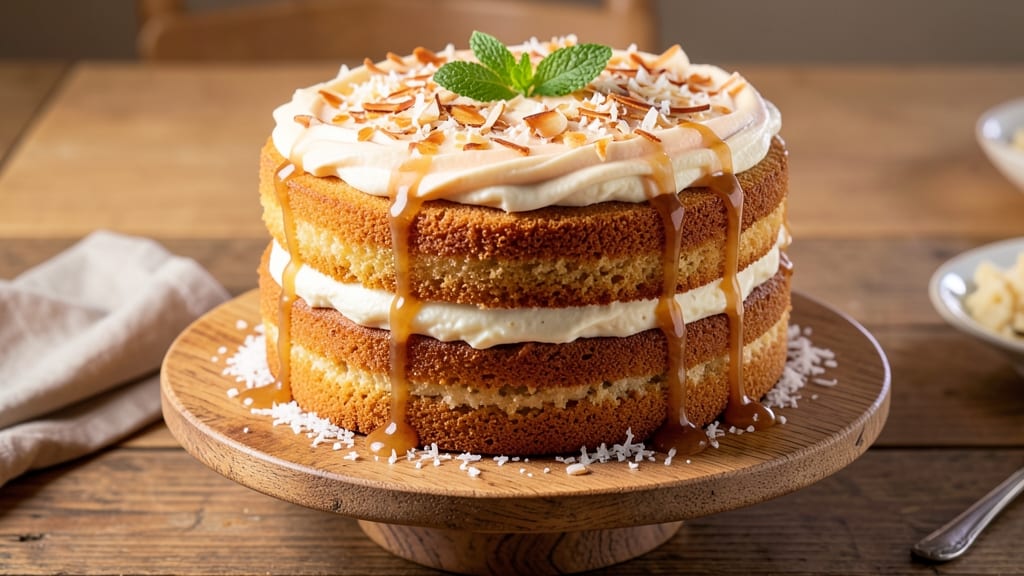
This 8-inch coconut cake recipe delivers tropical layers of moist vanilla cake infused with real coconut milk, topped with a toasted coconut crunch that tastes like a vacation in every bite.
The secret lies in the cake batter—where coconut milk replaces water for that signature island flavor—paired with a simple yet elegant coconut buttercream that ties everything together. I've baked this exact recipe for tropical-themed parties, and it never fails to disappear quickly.
What makes this cake special is the texture contrast: tender, fluffy layers with a crispy toasted coconut topping that adds both visual appeal and satisfying crunch. The recipe uses basic ingredients you likely already have—flour, sugar, eggs, and coconut milk—but the technique ensures professional-level results.
Baking at 350°F for 30-40 minutes guarantees perfectly set layers without drying out, while the cooling process is just as critical for clean slicing.
The frosting is where the magic happens—a silky coconut buttercream made with coconut oil and powdered sugar, whipped to a light, airy consistency that complements the cake's natural sweetness. For extra flair, toasted coconut flakes pressed into the sides add that signature tropical crunch.
This cake is elegant enough for celebrations but simple enough for a weeknight dessert that feels like a treat.
Optional variations include a vegan version using coconut oil and flax eggs, or adding a layer of passionfruit curd for a tangy contrast. The recipe scales easily for larger cakes, but the 8-inch size makes it perfect for sharing without overwhelming portions. Let's get baking!
Ingredients for 8 inch coconut cake
Tropical flavors and professional techniques combine in these 14 essential ingredients for an 8-inch coconut cake that delivers vacation-worthy texture and taste.
| Ingredient | Amount | Notes |
|---|---|---|
| All-Purpose Flour 🌾 | 2 ¼ cups | Sifted for light texture |
| Granulated Sugar 🍚 | 1 ½ cups | Superfine preferred for smoothness |
| Unsalted Butter 🧈 | 1 cup | Cold, cubed for proper creaming |
| Large Eggs 🥚 | 3 whole | Room temperature for even baking |
| Coconut Milk (Canned) 🥥 | 1 can | Full-fat for rich flavor |
| Vanilla Extract 🌿 | 2 tsp | Pure Madagascar preferred |
| Baking Powder 🧂 | 2 tsp | Aluminum-free for stability |
| Salt 🧂 | ½ tsp | Diamond Crystal kosher |
| Shredded Coconut (Sweetened) 🥥 | 1 ½ cups | Toasted for enhanced crunch |
| Powdered Sugar 🍚 | 3 cups | Confectioners' grade, sifted |
| Coconut Oil (Refined) 🫒 | ½ cup | Solid at room temperature |
| Heavy Cream 🥛 | ½ cup | Cold for stable whipping |
| Lemon Juice 🍋 | 1 tbsp | Freshly squeezed for brightness |
The coconut milk is non-negotiable here—Thai Kitchen brand delivers consistent quality, but any full-fat canned variety works. For the butter, Plugrá or Land O'Lakes unsalted are reliable choices, but avoid European-style butter which has lower fat content. The shredded coconut should be sweetened, unsweetened—the choice depends on whether you want extra sweetness or prefer to balance it with the cake's natural flavor. Toasting the coconut in a dry skillet until golden enhances its aroma and crunch, which is worth the extra minute. Store-bought coconut milk often separates; give the can a gentle shake before measuring to ensure even consistency throughout the batter.
No coconut milk? Substitute with 1 cup coconut cream plus 1/4 cup water for a similar texture, though the flavor will be slightly less rich. Running short on powdered sugar? Granulated sugar blended into a fine powder works in a pinch, though it may leave a slightly grainier frosting. For a vegan adaptation, replace the eggs with 3 flax eggs (3 tbsp ground flaxseed + 9 tbsp water) and use coconut oil instead of butter. The lemon juice adds brightness—if you're out, white vinegar or lime juice can substitute at the same amount, though the flavor profile will shift slightly. For the frosting, ensure your coconut oil is fully solidified before whipping to achieve that signature light, airy texture.
Store the cake layers in an airtight container between parchment paper for up to 3 days at room temperature, though they're best enjoyed within 24 hours for optimal texture. The frosting can be made 1 day ahead and stored in the fridge, then whipped briefly before use to restore its lightness. Fully assembled cake keeps for 5 days refrigerated, though the coconut topping may soften slightly. For longer storage, freeze the assembled cake (unfrosted) for up to 3 months—thaw overnight in the fridge before serving. The toasted coconut topping can be prepared 2 days ahead and stored in an airtight container at room temperature, though it's best used within 48 hours for maximum crunch.
Why You'll Love This Recipe
- No Mixer Needed: I swear by this—just fold the flour into the coconut milk, then whisk the eggs and butter right into the bowl. No stand mixer, no fuss, and the batter comes together smoother than I expected.
- Coconut Magic: That canned coconut milk? It’s the secret weapon. The cake stays moist for days (yes, I’ve tested this), and the buttery richness from the eggs balances the sweetness without tasting heavy. Honestly, it’s the kind of flavor that makes you want to bake it twice in one week.
- Party in a Pan: An 8-inch cake is the perfect size for a small gathering—no one feels shortchanged, and it’s easy to slice. Plus, it’s my go-to for birthdays or potlucks because it’s light enough to carry but hearty enough to impress.
- Budget-Friendly Luxury: You’re using pantry staples here: flour, sugar, butter, eggs, and coconut milk. The cost per serving is a fraction of what you’d pay for a bakery cake, but the texture? So tender it almost feels like a treat. (Yes, even on a Tuesday night.)
Step-by-step instructions for tropical coconut cake layers
Mastering this cake requires precision in layering and timing—each step builds the signature tropical texture.
Prepare the Cake Layers
Preheat your oven to 350°F and grease two 8-inch round cake pans with coconut oil, then line the bottoms with parchment paper. In a stand mixer fitted with the paddle attachment, cream together the 1 cup unsalted butter and 1.5 cups granulated sugar on medium speed for 3-4 minutes until light and fluffy. This step is critical—you're incorporating air that will create the cake's tender crumb.
Add the 3 whole large eggs, one at a time, mixing well after each addition. Then whisk in the 2 teaspoons vanilla extract and 1 tablespoon lemon juice. In a separate bowl, sift together the 2.25 cups all-purpose flour, 2 teaspoons baking powder, and 0.5 teaspoon salt. With the mixer on low speed, gradually add the dry ingredients to the wet mixture, mixing just until combined. Avoid overmixing—this creates dense cakes.
Bake and Prepare the Coconut Crust
Divide the batter evenly between the prepared cake pans. Bake for 25-30 minutes or until a toothpick inserted into the center comes out clean. Let the cakes cool in the pans for 10 minutes, then transfer to a wire rack to cool completely. While they cool, toast the 1.5 cups shredded coconut in a dry skillet over medium heat for 3-4 minutes until golden brown and fragrant.
For the crust, mix the toasted coconut with 0.5 cup coconut oil (melted) and press this mixture firmly into the bottom of a 9-inch springform pan, creating an even layer. This forms the signature crunchy base that anchors the cake layers.
Create the Coconut Cream Filling
In a medium saucepan, combine the 1 can coconut milk and 3 cups powdered sugar. Cook over medium heat, stirring constantly, until the sugar dissolves completely and the mixture thickens to a pudding-like consistency—this should take about 5-7 minutes. Remove from heat and let cool to room temperature. The filling should be smooth and glossy, with a thick, spoonable texture.
In a separate bowl, whip the 0.5 cup heavy cream to soft peaks using a hand mixer. Gently fold the whipped cream into the cooled coconut mixture until fully combined. This step creates the light, airy contrast that balances the dense cake layers.
Assemble the Cake Layers
Place one cake layer on top of the coconut crust in the springform pan. Spread approximately 1/3 of the coconut cream filling evenly over the cake layer, leaving a 1/2-inch border uncovered. Repeat with the second cake layer, then spread the remaining filling over the top. This layering technique ensures each bite delivers equal parts cake and filling.
Chill the assembled cake in the refrigerator for at least 4 hours, preferably overnight. This resting period allows the flavors to meld and the cake to set properly. The final texture should feature moist, tender cake layers separated by a luscious coconut cream filling, all framed by the crispy toasted coconut crust.
Pro Tips For Making 8 Inch Coconut Cake
- Bake at 325°F, Not Hotter: I learned this the hard way—coconut cakes dry out fast. The butter and coconut milk need slow cooking to stay moist, so resist the urge to crank the oven. If you’re impatient like me, check at 40 minutes and tent loosely with foil if the top browns too soon.
- Whip Eggs Until Pale, Not Stiff: Overmixing turns your cake dense and tough. Beat the eggs until just pale and slightly thickened—about 2-3 minutes—then fold in the flour gently. I used to go full speed, and the texture suffered. Think "light and airy," not "whipped to oblivion."
- Use Full-Fat Coconut Milk: The canned stuff varies wildly. If your recipe calls for 1 can (13.5 oz), don’t skimp—watered-down versions make the cake gummy. Shake the can hard before opening to redistribute the cream, or you’ll end up with a sad, curdled mess.
- Grease the Pan Twice: Butter + flour is standard, but coconut cakes stick like glue. After the first coat, use a paper towel to wipe away excess grease, then dust with flour again. I skip this step half the time, and the cake fights me when I pull it out—worth the extra 30 seconds.
Flavor customization for these flavors
Sweet-Tangy Twist
Add 2 tablespoons passionfruit curd between cake layers for a bright, tangy contrast that cuts through the richness. I like to swirl it gently with a knife after spreading the coconut cream filling—just enough to peek through in each bite.
For extra flair, top with 1 teaspoon lime zest mixed into the toasted coconut crust before pressing it into the pan. 🍋
Spiced Coconut Variation
Infuse the cake batter with 1 teaspoon ground cinnamon and ½ teaspoon cardamom for a warm, aromatic twist. Toast the coconut with ¼ teaspoon cayenne pepper for a subtle kick—just enough to wake up the flavors without overpowering.
This works especially well with a vanilla bean-infused coconut cream filling for deeper complexity.
Chocolate-Coconut Fusion
Fold ½ cup melted dark chocolate (60% cocoa) into the coconut cream filling for a decadent twist. Use ½ cup white chocolate chunksstrong> in the cake batter for pockets of creamy surprise.
Garnish with crushed pistachios on top for a sophisticated contrast. This version feels indulgent but still maintains the cake's tropical essence.
Citrus Zest Boost
Zest 1 lime and 1 orange finely and fold into the cake batter for a vibrant citrus note. Pair this with a coconut cream filling that includes 1 teaspoon orange blossom waterstrong> (available at Middle Eastern markets) for an exotic floral touch.
The citrus zest also pairs beautifully with the toasted coconut topping, creating a balanced flavor profile.
Nutty Crunch Addition
Press ½ cup finely chopped macadamia nutsstrong> into the coconut crust alongside the toasted coconut for added texture. Toast the nuts briefly in the same skillet as the coconut to enhance their flavor.
For extra richness, fold 2 tablespoons macadamia nut butterstrong> into the coconut cream filling. This adds a buttery depth that complements the cake's natural sweetness.
Boozy Infusion
Replace ¼ cup of the coconut milkstrong> with ¼ cup coconut rumstrong> (like Malibu) for a subtle boozy twist. Add 1 tablespoon dark rumstrong> to the coconut cream filling and let it sit for 10 minutesstrong> before whipping to infuse the flavors.
Garnish with a sprinkle of edible gold leaf for a festive touch—perfect for special occasions. 🍹
Nutrition facts
Frequently asked questions
Can I use a different-sized pan for this recipe?
Yes, but you'll need to adjust baking times and quantities. For an 8-inch round cake, bake at 350°F for 25-30 minutes. For a 9-inch pan, reduce oven temp to 325°F and bake for 35-40 minutes. Always check with a toothpick—it should come out clean. Scale ingredients proportionally if making a larger cake.
Why does my cake turn out dense instead of light?
Overmixing the batter is the most common cause. Mix just until combined—stop when no dry flour remains. Another tip: ensure your butter and eggs are room temperature and don't overbake. A toothpick should come out with a few moist crumbs, not completely dry. Also verify your baking powder is fresh.
How do I store leftover coconut cake?
Keep the assembled cake in an airtight container in the fridge for up to 5 days. For longer storage, freeze the unfrosted layers separately for 3 months. Thaw overnight in the fridge before assembling. The toasted coconut topping stays fresh at room temperature for 3 days in an airtight container.
Can I make this cake without coconut milk?
Yes! Substitute with 1 cup coconut cream plus ¼ cup water for similar texture, though flavor will be slightly less rich. For a dairy-free version, use 1 cup almond milk plus 2 tablespoons coconut oil. The cake will still have tropical notes but with a milder coconut flavor. Adjust other liquids as needed to maintain proper batter consistency.
What's the best way to add extra coconut flavor?
Try these pro tips: Replace ¼ cup of the water in the cake batter with ¼ cup coconut water for deeper flavor. Add 1 teaspoon coconut extract to the frosting. For the crust, mix in 1 tablespoon desiccated coconut (finely ground) along with the toasted flakes. These tweaks amplify the tropical essence without altering the recipe's balance.