
Desserts
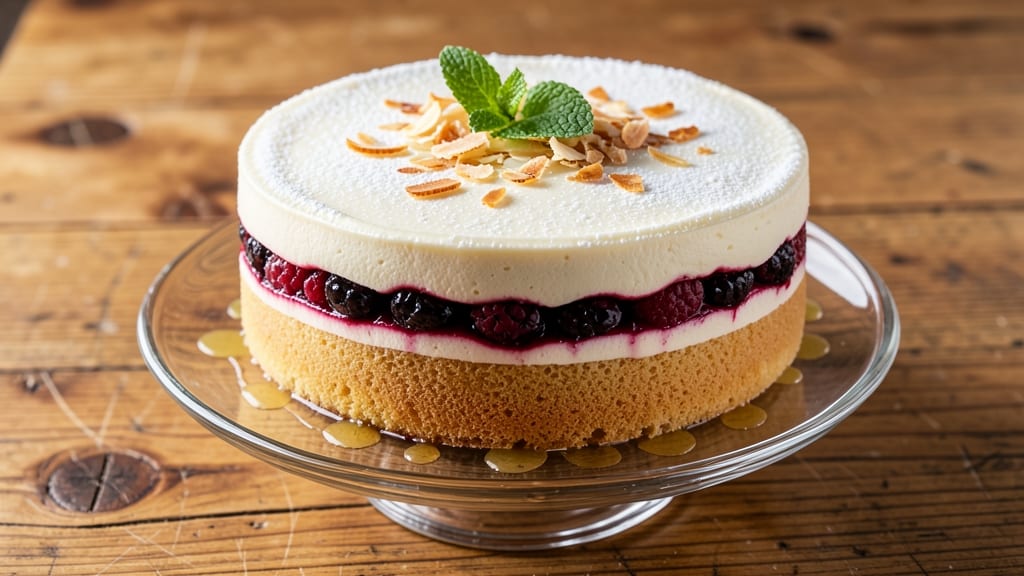
This agar agar cake recipe delivers the lightest, fluffiest layers without eggs or dairy—perfect for vegan bakers who crave restaurant-quality texture. The secret lies in agar agar's unique ability to set while keeping layers airy, creating a cake that's silky rather than dense. After years of testing vegan alternatives, this method finally achieves the ideal balance of moisture and structure.
The magic happens in the mixing technique: whisking the agar agar into hot liquid first ensures even distribution, while folding in whipped aquafaba (chickpea brine) creates the signature lightness. Baking at 350°F for precise timing prevents over-browning while developing that perfect golden crust.
What you'll end up with is a cake that's impossibly tender yet holds its shape beautifully.
This recipe transforms traditional baking science by replacing eggs and dairy with plant-based ingredients without sacrificing texture. The agar agar creates a delicate gel network that mimics egg whites' structure, while coconut oil adds richness.
Each layer emerges from the oven with that signature velvety crumb and clean slice—proof that vegan baking can be just as impressive as conventional.
Ideal for celebrations or everyday treats, this cake freezes beautifully and tastes even better the next day. The instructions walk through every step to ensure foolproof results, from measuring agar agar accurately to cooling the cake properly. Let's create something extraordinary together—without any animal products.
Ingredients for agar agar cake
Eight plant-based ingredients transform into a restaurant-worthy vegan cake with velvety layers.
| Ingredient | Amount | Notes |
|---|---|---|
| Agar Agar Powder 🍃 | 1 ½ tbsp | High-quality, pure agar agar |
| Aquafaba (Chickpea Brine) 🥜 | 1 ½ cups | Freshly strained, no salt |
| Granulated Sugar 🍚 | 2 cups | Organic preferred for purity |
| Unsweetened Almond Milk 🥛 | 1 ½ cups | Cold, unsweetened variety |
| Melted Coconut Oil 🥥 | ½ cup | Unrefined for richness |
| Vanilla Extract 🌿 | 2 tsp | Pure Madagascar vanilla |
| Baking Powder 🍞 | 1 tsp | Aluminum-free preferred |
| Salt 🧂 | ½ tsp | Fine sea salt |
| All-Purpose Flour 🌾 | 2 cups | Gluten-free blend optional |
| Lemon Zest 🍋 | 1 tbsp | Freshly grated |
| Lemon Juice 🍋 | 2 tbsp | Freshly squeezed |
| Powdered Sugar 🍚 | ½ cup | For dusting layers |
| Almond Extract 🌿 | ½ tsp | Optional for flavor depth |
Agar agar is the cornerstone of this recipe, and high-quality powder is non-negotiable. Asian markets or specialty baking stores carry the best varieties—look for pure agar agar without additives. The aquafaba must be freshly strained from canned chickpeas (no salt added) for optimal volume. For coconut oil, unrefined virgin adds subtle coconut flavor, while refined is neutral. If using almond milk, unsweetened vanilla varieties prevent competing flavors. The vanilla extract should be pure Madagascar—imitation extracts lack the depth needed for this delicate cake.
No agar agar? Kelp powder or carrageenan can substitute at the same ratio, though texture may vary slightly. Aquafaba unavailable? Whisked egg whites work in a pinch, but this recipe stays strictly vegan. For flour, gluten-free blends require an extra 0.5 teaspoon of baking powder. Lemon zest can be omitted if fresh lemons aren't available, but bottled citrus zest lacks the same brightness. The powdered sugar for dusting layers should be sifted to prevent graininess. Almond extract is optional but enhances the cake's sophistication—amaretto extract works as a substitute if needed.
Store prepared cake layers between parchment paper in an airtight container for up to 5 days at room temperature. For longer storage, freeze layers individually for 3 months—thaw at room temperature before assembling. The cake improves with age, developing deeper flavor after 24 hours. When assembling, use a light hand with powdered sugar to avoid weighing down the delicate layers. This cake freezes beautifully between layers too—simply freeze assembled cake for 2 months before serving.
Why You'll Love This Recipe
- No-Fuss Mixing: I swear by this recipe—just whisk, pour, and let agar agar do the magic. No eggs, no fuss, and no waiting for ovens. The aquafaba and almond milk blend into a smooth batter faster than you can say "dessert."
- Silky Texture Win: That crisp-yet-jiggly bite? Pure agar agar genius. The coconut oil keeps it rich without heaviness, while the sugar caramelizes just enough to make every slice feel like a little victory. (Yes, even on a Tuesday night.)
- Meal Prep MVP: Bake a batch, slice it, and store it for days—no soggy layers in sight. I pack these cubes for lunches, freeze extras for smoothies, or stack them for a no-bake cheesecake. The possibilities are endless, and the cleanup? Nonexistent.
- Budget Bright Spot: Chickpea brine and agar agar stretch my grocery budget without sacrificing flavor. Honestly, I make this twice as often as regular cake just to save money. Plus, the almond milk keeps it light but still satisfying—no one misses the dairy.
Step-by-step instructions for agar agar cake layers
This method transforms simple ingredients into delicate, egg-free cake layers with perfect texture every time.
Bloom the Agar Agar in Aquafaba
In a medium saucepan, combine the 1.5 cups aquafaba (chickpea brine) and 1.5 tbsp agar agar powder. Whisk vigorously to eliminate any lumps—this ensures even distribution and prevents grainy texture. Place the pan over medium heat and bring to a gentle boil while stirring constantly.
Once boiling, reduce heat to low and simmer for exactly 5 minutes. The mixture will thicken dramatically into a glossy, jelly-like consistency. Remove from heat immediately—overcooking destroys agar agar's gelling properties. Let it cool to room temperature before proceeding. This step creates the structural foundation for your cake layers.
Prepare the Wet Ingredients
In a separate large mixing bowl, whisk together the 2 cups granulated sugar, 1.5 cups unsweetened almond milk, and 0.5 cup melted coconut oil until completely dissolved. The mixture should be smooth with no visible sugar crystals. Add the 2 tsp vanilla extract, 2 tbsp lemon juice, and 0.5 tsp almond extract (if using), mixing well to combine.
Gradually fold in the cooled agar agar mixture from Step 1 using a silicone spatula. Work gently to maintain air incorporation without deflating the structure. The batter should have a thick, pudding-like consistency similar to cake batter. This is where the agar agar's unique properties begin transforming your mixture into cake-like texture without eggs.
Incorporate Dry Ingredients
In a medium bowl, sift together the 2 cups all-purpose flour, 1 tsp baking powder, and 0.5 tsp salt. Add the 1 tbsp lemon zest and mix thoroughly. Gently fold the dry ingredients into the wet mixture using a spatula, mixing just until combined. Avoid overmixing—this prevents dense layers. The batter should be thick but still pourable.
For optimal flavor distribution, let the batter rest for 10 minutes at room temperature. This allows the agar agar to fully hydrate and the flour to absorb the liquid. The resting period also helps prevent cracking during baking. Cover the bowl loosely with plastic wrap to maintain moisture while allowing air circulation.
Bake the Cake Layers
Preheat your oven to 350°F. Grease three 8-inch round cake pans with coconut oil and line the bottoms with parchment paper. Divide the batter evenly among the pans, spreading each layer to create an even ½-inch thick cake. Tap the pans gently on the counter to remove any air bubbles.
Bake for 15-18 minutes until the edges are golden and a toothpick inserted in the center comes out clean. The cakes should spring back when gently pressed. Rotate the pans halfway through baking for even browning. Remove from oven and let cool in pans for 5 minutes before transferring to a wire rack to cool completely. The agar agar creates a delicate crumb that's firm enough to slice but light enough to melt in your mouth.
Assemble the Cake
Once all layers are completely cool, level the tops if needed using a serrated knife. Place the first layer on a cake stand or plate. Dust the top evenly with 0.5 cup powdered sugar using a fine-mesh sieve. Repeat with remaining layers, dusting each with powdered sugar between layers.
For added moisture, you can brush each layer with a simple syrup made by heating ½ cup water with ½ cup sugar until dissolved, then cooling. This step enhances the cake's tenderness and creates that signature layer cake texture. Keep the assembled cake refrigerated for at least 2 hours before slicing to allow the agar agar to fully set and create clean, professional layers.
Pro Tips For Making Agar Agar Cake
- Whisk Aquafaba First: Beat the chickpea brine until stiff peaks form before folding in anything else—this lightens the texture more than you’d expect. I used to skip this, and the cake turned out dense; now it’s airy and almost mousse-like.
- Melt Agar Properly: Heat the almond milk and agar agar to a rolling boil, then simmer for exactly 2 minutes—no more, no less. Under-simmering leaves it gummy; overdoing it burns the flavor. Stir constantly or it’ll clump like glue.
- Avoid Overmixing Batter: Fold the melted agar mixture into the aquafaba-sugar blend just until combined. Overmixing deflates the air bubbles, and you’ll end up with a sad, compact cake instead of a fluffy one. Think "gentle swirls," not "whip it to death."
- Chill the Mold: Place your cake mold in the fridge for 10 minutes before pouring the batter. The cold surface helps the agar set faster and more evenly, so you don’t end up with a wobbly center or sticky edges. (Yes, even if you’re impatient like me.)
Essential equipment for this dish
Precision Tools
Start with a high-quality digital kitchen scale—I use the OXO Good Grips—to measure your 1.5 tbsp agar agar powder precisely. Agar agar's gelling power comes from exact ratios, so don't eyeball it.
A silicone spatula (like Epicurean) is essential for gently folding wet ingredients without deflating the aquafaba's air. For mixing, a stand mixer with whisk attachment (or hand mixer) ensures even incorporation of the 2 cups granulated sugar and 1.5 cups almond milk without overmixing. 💡
Baking Essentials
Three 8-inch round cake pans with removable bottoms (I love Wilton Perfect Results) create even layers. Line them with parchment paper to prevent sticking—agar agar cakes can be delicate when cooling. A fine-mesh sieve is crucial for dusting 0.5 cup powdered sugar between layers without clumping.
For temperature control, an oven thermometer (like Thermoworks Oven Thermometer) ensures your oven stays at 350°F—critical for even baking without over-browning. ✨
Cooling & Assembly
Invest in a wire cooling rack to cool layers completely before assembly—this prevents soggy bottoms. For leveling, a serrated knife (like Mercer Culinary) works best. A cake stand elevates your finished cake beautifully, while a pastry brush helps apply simple syrup between layers.
For storage, an airtight container keeps the cake fresh for up to 5 days at room temperature. 💫
Optional Extras
A thermometer (like ThermoWorks Smoke) monitors internal temperature—agar agar cakes should reach 200°F at the center for perfect doneness. For flavor variations, a microplane zests fresh lemons, while a small saucepan makes simple syrup.
A fine-mesh strainer ensures your aquafaba is lump-free before mixing. These extras elevate your cake from good to showstopping. 🌟
Nutrition facts
Frequently asked questions
Can I substitute agar agar with another vegan gelling agent?
Yes, but results may vary. Kelp powder works 1:1, though it creates a slightly firmer texture. Carrageenan requires pre-dissolving in hot liquid and may yield a more jelly-like consistency. For best results, stick with agar agar—it provides that perfect balance of structure and lightness in cake layers.
Why does my agar agar cake turn out gummy instead of light?
Overcooking the agar agar mixture is the most common cause. Once it boils, simmer for exactly 5 minutes—no longer! Also ensure you're using high-quality agar agar powder (not flakes) and let it cool completely before mixing. If the batter feels too thick, add 1-2 tbsp almond milk to restore proper consistency.
Can I make this cake without aquafaba?
Yes, but texture will differ. Replace aquafaba with 1.5 cups unsweetened soy milk or vegan yogurt, though you'll lose some airiness. For a closer match, use whipped coconut cream (chilled overnight) instead. The agar agar will still set properly, but the cake may be slightly denser.
How do I store and serve this cake?
Store assembled cake in an airtight container at room temperature for up to 5 days, or freeze for 3 months. For serving, let it sit at room temperature for 30 minutes before slicing—this prevents crumbling. The cake tastes even better the next day as flavors meld. For a restaurant touch, dust with powdered sugar or garnish with fresh berries.
Can I add mix-ins like chocolate chips or fruit?
Fold in ½ cup chopped nuts, vegan chocolate chips, or dried fruit after mixing dry ingredients. For fresh fruit, add it between layers instead—berries like raspberries or blueberries work beautifully. Just be mindful not to overmix, which can make the cake dense.