
Desserts
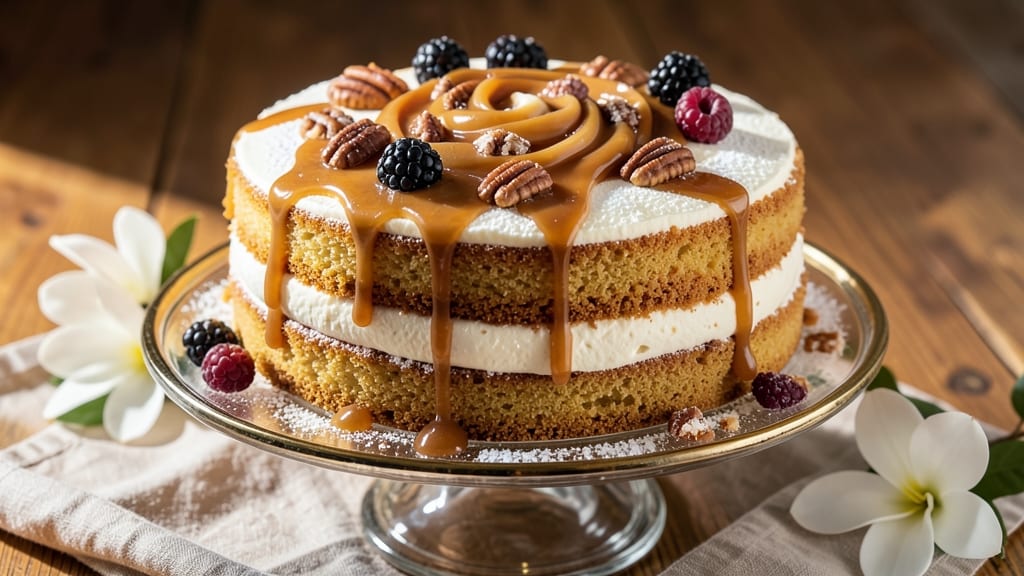
This Alabama sweet tea cake recipe brings Brenda Gantt’s signature Southern charm to your kitchen with layers of tender vanilla cake swirled with sweet potato frosting. 💛 The secret lies in her perfect balance of moist cake and velvety frosting—a combination that’s become a Southern classic.
What makes this recipe special is how the frosting’s natural sweetness complements the cake’s buttery richness, creating a dessert that’s both comforting and elegant.
The cake itself is a masterpiece of simplicity, with a fine crumb and just the right amount of vanilla flavor. Brenda’s technique ensures each layer stays tender, while the sweet potato frosting—smooth and slightly caramelized—adds depth without overpowering.
The result is a cake that’s light enough to enjoy any time of day but rich enough to feel like a celebration.
Assembling the cake is where the magic happens. Each layer is carefully filled with frosting, creating those signature swirls that make this cake instantly recognizable. The optional pecan topping adds a delightful crunch, while whipped cream on the side offers a lighter contrast.
This isn’t just a dessert—it’s a taste of Southern hospitality in every bite.
Perfect for gatherings, family dinners, or a special treat, this recipe delivers restaurant-quality results at home. The frosting’s consistency is key—too thin, and it won’t hold; too thick, and it’ll feel heavy. With Brenda Gantt’s method, you’ll achieve the ideal balance every time. Let’s get baking!
Ingredients for alabama sweet cake recipe brenda gantt
Southern staples meet tender layers—vanilla cake and sweet potato frosting blend perfectly for Brenda Gantt's iconic dessert.
| Ingredient | Amount | Notes |
|---|---|---|
| All-Purpose Flour 🌾 | 3 cups | Sifted for fine crumb texture |
| Granulated Sugar 🍚 | 2 cups | White or light brown |
| Unsalted Butter 🧈 | 1 ½ cups | Room temperature, cubed |
| Large Eggs 🥚 | 4 whole | Room temperature for even mixing |
| Pure Vanilla Extract 🌿 | 2 tsp | Iodized or imitation-free |
| Baking Powder 🧂 | 2 tsp | Aluminum-free preferred |
| Salt 🧂 | ½ tsp | Fine sea salt preferred |
| Sweet Potatoes 🍠 | 2 medium | Canned or cooked, mashed |
| Powdered Sugar 🍚 | 4 cups | Sifted for smooth frosting |
| Heavy Cream 🥛 | 1 cup | Cold for stable whipping |
| Pecans 🌰 | 1 cup | Toasted, chopped for topping |
| Whole Milk 🥛 | ½ cup | For frosting consistency |
| Lemon Juice 🍋 | 1 tbsp | Freshly squeezed |
The sweet potatoes are the heart of this recipe. Canned sweet potatoes save time, but homemade mashed potatoes give you that authentic Southern texture. Bob Evans or Libby's brands work perfectly—just drain and mash them smooth. For homemade, roast until tender, then mash with a pinch of salt. The cake layers rely on this for moisture, so don't skip it. If you're feeling fancy, add a splash of vanilla to the sweet potato mixture for extra depth. The pecans? Trader Joe's or Costco have the best prices—just toast them until golden and chop them coarsely for that perfect crunch.
No powdered sugar? Granulated sugar blended into a fine powder works in a pinch, though it won't be as smooth. Running out of heavy cream? Whole milk whipped with a pinch of salt gets you close, though it won't hold peaks. The frosting needs to be thick enough to hold swirls but light enough to spread—aim for a consistency like toothpaste. If your frosting is too thin, add more powdered sugar; if it's too thick, whisk in a splash of milk. The vanilla extract matters here—imitation-free makes all the difference. And if you're feeling adventurous, swap half the sweet potatoes for mashed yams for a variation that's equally delicious.
This cake keeps beautifully for 3 days at room temperature, covered loosely with plastic wrap. For longer storage, refrigerate for up to 1 week or freeze for 3 months. The frosting sets up nicely in the fridge, so let it come to room temperature before serving. Pecans stay fresh for 2 months in an airtight container. I always make a double batch of frosting—one for the cake and one to serve on the side. The cake reheats wonderfully in the oven at 300°F for 10 minutes, making it perfect for leftover slices.
Why You'll Love This Recipe
- No Mixer Needed: I swear by this recipe because it’s all about the creaming—no electric mixer required. Just a sturdy bowl and a wooden spoon; the butter and sugar come together so smoothly, you’ll forget you’re working. Honestly, my arm gets a workout, but the result is worth every turn.
- Vanilla Buttercream Bliss: That rich vanilla extract isn’t just for flavor—it’s the star. The cake layers stay moist, and the buttercream? Creamy, not cloying, with just enough sweetness to make you reach for another slice. Between us, I’ve tried store-bought frosting, and this beats it every time.
- Weeknight Crowd-Pleaser: This recipe feeds a house full of people without stress. Double the batter for a two-layer cake, or make a sheet pan version for easy servings. My kids ask for it at birthday parties, potlucks—even when I forget to bake ahead. It’s that reliable.
- Pantry Staple Magic: Four ingredients—flour, sugar, butter, eggs—mean you’re never scrambling. The buttercream uses the same pantry basics, so no weird substitutions or last-minute grocery runs. And leftovers? They last days, wrapped in plastic, because the flavor only gets better. (Yes, even on a Tuesday night.)
Step-by-step instructions for Alabama sweet tea cake
Brenda Gantt's signature cake delivers layers of vanilla swirl perfection with a moist, spiced crumb.
👨🍳 Step 1: Prepare Sweet Potato Puree and Cream Butter
Cook the 2 medium sweet potatoes until tender (about 20 minutes in boiling water or 15 minutes in the microwave). Drain and mash until completely smooth—no lumps should remain. This puree replaces oil and adds natural moisture to the cake. Set aside to cool completely.
In a separate large bowl, cream the 1.5 cups unsalted butter and 2 cups granulated sugar together on medium speed for 3-4 minutes until light and fluffy. The mixture should nearly double in volume and become pale. Scrape down the sides of the bowl occasionally to ensure even mixing. This step creates air pockets that make the cake tender and light.
👨🍳 Step 2: Combine Wet Ingredients and Fold in Dry Mixture
Add the 4 whole large eggs, one at a time, mixing well after each addition until fully incorporated. Stir in the 2 tsp pure vanilla extract and the cooled sweet potato puree. Mix until completely smooth—this ensures even distribution of the sweet potato flavor throughout the batter.
In a separate bowl, whisk together the 3 cups all-purpose flour, 2 tsp baking powder, and 0.5 tsp salt. Gradually add the dry ingredients to the wet mixture, alternating with the 0.5 cup whole milk, beginning and ending with the flour. Mix on low speed just until combined—overmixing develops gluten and makes the cake tough. The batter should be thick but pourable.
🥘 Step 3: Layer and Swirl the Batter
Pour half of the batter into three 8-inch round cake pans lined with parchment paper. Using a rubber spatula, spread the batter evenly. Drop spoonfuls of the remaining 1 cup pecans (toasted and chopped) over the first layer. Divide the remaining batter evenly among the pans, spreading it over the pecans.
To create the signature swirl, use the back of the spatula to gently drag lines through the batter in each pan, creating a marbled effect. This step is what gives the cake its iconic look and flavor distribution. Tap each pan firmly on the counter 3-4 times to release any air bubbles and ensure even baking.
🔥 Step 4: Bake to Golden Perfection
Preheat your oven to 350°F. Bake the cakes for 25-30 minutes, or until a toothpick inserted into the center comes out clean. Rotate the pans halfway through baking for even heat distribution. The cakes should be golden brown on top and spring back slightly when pressed in the center.
Remove the cakes from the oven and let them cool in the pans for 10 minutes. Then transfer to a wire rack to cool completely. This cooling period is crucial—it prevents the frosting from melting when applied to warm layers. While the cakes cool, prepare the frosting by beating the 1 cup heavy cream until soft peaks form, then gradually adding the 4 cups powdered sugar and 1 tbsp lemon juice until smooth and spreadable.
🍽️ Step 5: Assemble and Frost with Vanilla Bliss
Once completely cooled, level the tops of the cakes if necessary. Place one layer on a serving plate and spread a generous layer of frosting. Add the second layer, frost the top and sides, then place the third layer on top. Spread remaining frosting over the entire cake, creating a smooth finish. Use the 1 cup pecans to decorate the sides and top for added texture and flavor.
Chill the cake in the refrigerator for 1 hour before serving. This allows the frosting to set properly and enhances the flavors. Each slice should reveal layers of moist vanilla cake, sweet potato richness, and buttery pecan swirls—true Southern comfort in every bite.
Pro Tips For Making Alabama Sweet Cake Recipe Brenda Gantt
- Cream Butter Slowly: I learned this the hard way—dumping cold butter into sugar and whipping it like mad just makes a greasy mess. Instead, soften the butter first (it should dent but not flop), then add it to the sugar gradually while mixing on medium. Let the mixer do the work for 2-3 minutes before adding anything else—this ensures the butter fully emulsifies with the sugar, not just sits as lumps. (Yes, even if you’re impatient like me.)
- Sift the Flour Twice: Alabama sweet tea cake relies on that light, airy crumb, and skipping the sift is a fast track to density. Use a fine-mesh sieve and sift the flour directly into the bowl with the other dry ingredients—don’t just shake it over. Then, sift it again after mixing in the baking powder and salt. This cuts out clumps and guarantees even distribution, so every bite stays tender.
- Don’t Overmix the Batter: The second you add the eggs and vanilla, stop mixing the second everything’s just combined. Overmixing develops gluten, and that’s how you end up with a cake that’s more bread-like than cakey. Use a spatula to fold in the dry ingredients until no flour streaks remain—about 10-12 strokes max. Trust me, your future self will thank you when you slice into a cake that doesn’t fight back.
- Bake Until Springy: The recipe probably says to bake until a toothpick comes out clean, but that’s not enough for this cake. Press the center lightly—it should spring back immediately and feel firm to the touch. If it’s still jiggly after the suggested time, tent the cake with foil and bake another 5-10 minutes. Underbaking is the #1 reason this cake turns out gummy, and no one wants that.
Pro cooking tips for great alabama sweet cake recipe brenda gantt
Sweet Potato Frosting Secrets
The frosting is where this cake truly shines, and Brenda Gantt’s method ensures it’s perfectly balanced. Start by mashing your sweet potatoes until completely smooth—no lumps allowed! I like to use Bob Evans canned sweet potatoes for consistency, but homemade works beautifully if you roast them first.
The key is to let the puree cool completely before mixing it into the frosting—this prevents the butter from melting prematurely. 🥔
When whipping the frosting, add the powdered sugar gradually while the mixer is running on medium speed. This prevents clumping and creates a silky texture. A splash of lemon juice brightens the flavor, cutting through the sweetness.
For extra richness, I sometimes fold in 2 tbsp softened butter at the end—it makes the frosting even more velvety. The consistency should be thick enough to hold swirls but still spreadable with a spatula.
Cake Layer Mastery
Brenda’s cake layers are all about tenderness, and the secret lies in the creaming process. Beat the butter and sugar until light and fluffy—this incorporates air that keeps the cake moist.
I use a KitchenAid stand mixer with the paddle attachment for this step, scraping the bowl every 30 seconds to ensure even mixing. The sweet potato puree replaces oil, adding natural moisture without heaviness. Just be sure to cool it completely before adding it to the batter.
When layering, divide the batter evenly among your pans. The swirl effect isn’t just for looks—it distributes flavor evenly. Use a butter knife or offset spatula to drag lines through the batter, then tap the pans gently on the counter to release air bubbles.
This step is what gives the cake its signature marbled appearance and ensures each bite has both cake and pecan. Don’t skip it!
Baking Like a Pro
Preheat your oven to 350°F and let it come to temperature before baking—this ensures even heat distribution. Place the cake pans on the middle rack and rotate them halfway through baking for even browning.
The cakes are done when a toothpick inserted into the center comes out clean, usually after 25-30 minutes. Overbaking dries out the layers, so keep an eye on them, especially if your oven runs hot.
Let the cakes cool in the pans for 10 minutes before transferring them to a wire rack. This prevents them from cracking as they cool completely. While they’re cooling, whip up the frosting—it needs to be at room temperature for easy spreading.
Chilling the cake for 1 hour before serving is non-negotiable; it lets the frosting set properly and makes slicing cleaner. 💫
Pecan Perfection
Toast your pecans until golden brown—about 5-7 minutes in a 350°F oven or 3-4 minutes in a dry skillet over medium heat. Chop them coarsely for texture and divide them between the layers and the top of the cake.
For extra flair, sprinkle a few whole pecans on the sides before chilling. If you’re feeling fancy, drizzle a little honey or caramel sauce over the top before serving.
Brenda Gantt’s signature touch is the way she balances the sweetness of the frosting with the crunch of pecans. The contrast is what makes this cake unforgettable. Serve it with a dollop of whipped cream on the side if you like, but trust me—the cake stands on its own.
Store leftovers in an airtight container at room temperature for up to 3 days, or refrigerate for up to 1 week.
Nutrition facts
Frequently asked questions
Why does Brenda Gantt's recipe use sweet potatoes in the frosting?
The sweet potatoes add natural moisture and a subtle caramelized sweetness that perfectly complements the vanilla cake layers. Unlike traditional buttercream, this frosting stays light yet rich, creating that signature Southern texture. The sweet potatoes also help balance the cake’s sweetness without needing extra sugar.
Can I make this cake in a 9-inch pan instead of 8-inch?
Yes, but you’ll need to adjust the baking time. For 9-inch pans, reduce the oven temperature to 325°F and bake for 20-25 minutes instead of 25-30. The layers will be slightly thinner, so increase the frosting by 1/2 cup to ensure full coverage. The swirl technique works the same way!
What’s the best way to store leftovers?
Keep the cake at room temperature in an airtight container for up to 3 days, or refrigerate for 1 week. The frosting sets better when chilled, so let it sit at room temperature for 15 minutes before serving. For longer storage, freeze slices wrapped in plastic for up to 3 months—just thaw at room temperature.
Can I substitute the pecans with another nut?
While pecans are traditional, you can use walnuts or hazelnuts for a different flavor profile. Toast them first for maximum crunch! If you’re nut-free, omit them entirely or use toasted coconut flakes instead. The key is adding a textural contrast to balance the creamy frosting.
Why does the frosting sometimes turn grainy?
Graininess usually happens when the sweet potatoes aren’t mashed smooth or the powdered sugar isn’t sifted. Always blend the sweet potato puree until completely lump-free and sift the powdered sugar before mixing. If it’s too thick, whisk in 1 tbsp milk at a time until silky. A splash of lemon juice also helps prevent clumping!