
Main Courses
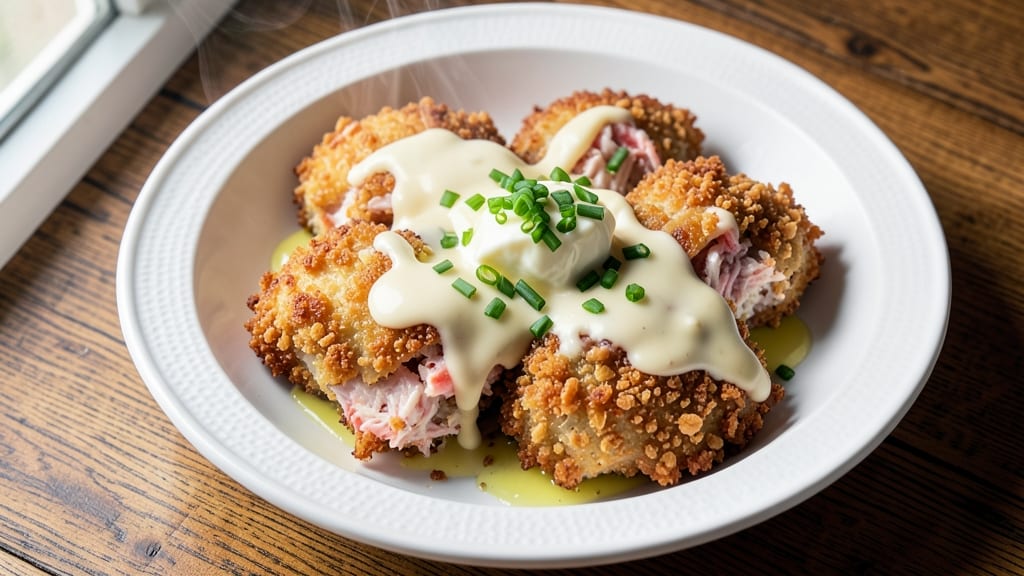
Alex Guarnaschelli’s crab cakes deliver that perfect balance of crispy golden crust and tender, flavorful interior that makes them restaurant-worthy. The secret lies in the chilled batter—a technique that ensures structural integrity—and the zesty lemon butter drizzle that ties everything together.
What sets these apart is the careful blend of sweet and savory flavors, with just enough heat to keep your palate engaged.
This recipe uses lump crab meat (the star ingredient) bound with a mix of mayo, Dijon mustard, and panko for that signature texture. The batter needs time to rest in the fridge—at least 30 minutes—so the flavors meld and the cakes hold their shape when frying.
High heat is key: 350°F oil ensures a crisp exterior without overcooking the delicate crab inside.
When plated, these crab cakes shine with their caramelized edges and bright, buttery drizzle. Serve them alongside a crisp green salad or roasted asparagus to balance the richness. The lemon butter isn’t just garnish—it’s the finishing touch that elevates every bite, just like Guarnaschelli would serve them.
Pro tip: Don’t skip the chilling step, and press the cakes gently with a spatula while frying to maintain shape. Leftovers keep well in the fridge for up to 2 days, though they’re best enjoyed fresh.
This is seafood dining at its finest—foolproof, elegant, and impossible to resist.
Ingredients for alex guarnaschelli crab cake
The secret to Guarnaschelli’s signature crab cakes lies in these 13 carefully chosen ingredients—each playing a precise role.
| Ingredient | Amount | Notes |
|---|---|---|
| Lump Crab Meat 🦀 | 1 ½ lb | Backfin preferred for texture |
| Mayonnaise 🥫 | ½ cup | High-quality, full-fat preferred |
| Dijon Mustard 🍯 | 1 tbsp | For tangy depth of flavor |
| Japanese Panko Breadcrumbs 🍞 | ½ cup | Light and crispy texture |
| Fresh Lemon Juice 🍋 | 2 tbsp | Freshly squeezed for brightness |
| Unsalted Butter 🧈 | 2 tbsp | Cold, cubed for drizzle |
| Shallots 🧅 | 2 whole | Finely minced for sweetness |
| Fresh Chives 🌿 | 2 tbsp | Chopped for fresh herb note |
| Egg Yolks 🥚 | 2 whole | For binding and richness |
| Vegetable Oil 🫒 | 3 cups | For frying at 350°F |
| Diamond Crystal Kosher Salt 🧂 | 1 tsp | For seasoning batter |
| Ground White Pepper 🌶️ | ½ tsp | For subtle peppery note |
| All-Purpose Flour 🌾 | 1 tbsp | For dredging cakes |
The lump crab meat is non-negotiable—backfin delivers that signature texture. Trader Joe's and Whole Foods carry the best quality, but avoid pre-packaged crabmeat with fillers. Freshness is key: the meat should smell briny, not fishy. For the mayo, Hellmann's or Duke's are reliable, but homemade with olive oil and egg yolks elevates the dish. The Dijon mustard should be thick and robust—Maille is ideal. Shallots add subtle sweetness; organic ones from the produce section have more depth. Chives should be bright green, not wilted, and the Japanese panko must be light and crispy—Kikkoman or Suzuki are industry standards.
No lump crab? Imitation crab (surimi) works in a pinch, but texture will differ. Swap Dijon for whole-grain mustard if unavailable, though flavor will be milder. The egg yolks can be replaced with 2 tbsp aquafaba for a vegan alternative, though binding won’t be as firm. For the butter drizzle, European-style unsalted butter like Plugrá adds richness. The vegetable oil should have a high smoke point—Avocado oil or refined peanut oil are excellent choices. If you’re short on time, pre-minced shallots from the refrigerated section save steps, though fresh is always better. The kosher salt should be Diamond Crystal—it dissolves more easily than Morton’s.
The crab batter must rest for at least 30 minutes in the fridge—this is non-negotiable for structural integrity. Store any unused crab meat in an airtight container with a paper towel pressed on top for up to 2 days. The panko loses crispiness over time, so use it within 1 month of opening. Leftover crab cakes reheat best in a 300°F oven for 5-7 minutes to restore crispiness. For the lemon butter drizzle, store it in a small jar in the fridge for up to 1 week, adding a splash of lemon juice to preserve freshness. Freeze the batter (without frying) for up to 1 month—thaw overnight before shaping.
Why You'll Love This Recipe
- No-Fuss Assembly: I swear, these come together faster than takeout. Just mix the lump crab with mayo, mustard, and lemon juice—no chopping, no fuss—then press the panko on top. That’s it. Even my "I can barely boil water" friends nail them.
- Zesty Crunch Magic: The lemon juice cuts through the richness of the crab, while the panko gives this thing a golden, addictive crunch. Honestly, the first bite feels like a hug for your taste buds—bright, buttery, and just salty enough to make you reach for another.
- Weeknight to Dinner Party: Make a batch on Sunday, store them in the fridge, and pull them out for lunch, a quick dinner, or even a fancy-ish gathering. They reheat beautifully (or eat cold—no judgment) and look impressive with zero effort. My secret weapon for when I forget to RSVP.
- Leftovers That Don’t Suck: Unlike most fried things, these actually taste better the next day. The panko stays crispy, the crab doesn’t dry out, and I’ve sent them to work lunches with zero complaints. Between us, this is the only recipe where leftovers feel like a win.
Step-by-step instructions for alex Guarnaschelli-style crab cakes
Master the perfect balance of crispy exterior and tender interior with these expert techniques.
Prepare the Crab Cake Batter
In a large mixing bowl, combine the 1.5 lb lump crab meat with the 0.5 cup mayonnaise and 1 tbsp Dijon mustard. Use your hands to gently mix until just incorporated—don't overwork the crab or it will release too much liquid. Add the 2 tbsp fresh lemon juice, 2 tbsp chopped fresh chives, 1 tsp Diamond Crystal kosher salt, and 0.5 tsp ground white pepper, mixing lightly to distribute evenly.
Next, fold in the 0.5 cup Japanese panko breadcrumbs and 2 whole egg yolks until the mixture comes together in a cohesive but still slightly crumbly texture. The batter should hold its shape when pressed gently between your fingers but not be overly compact. This texture ensures proper binding while maintaining that signature crispy exterior. If the mixture feels too wet, add 1 tbsp all-purpose flour, 1 tablespoon at a time, until it reaches the ideal consistency.
Form and Chill the Cakes
Divide the batter into 4 equal portions (about 4 ounces each) and gently shape them into ½-inch thick patties, slightly larger than your intended serving size. I press down firmly but evenly to create uniform thickness—this prevents uneven cooking and ensures consistent doneness. Place the formed cakes on a parchment-lined plate and cover with plastic wrap.
Refrigerate for at least 30 minutes (up to 2 hours). This chilling step is crucial—it firms up the crab mixture, prevents excessive spreading during frying, and allows the flavors to meld. The cakes should feel cold and firm to the touch when ready to cook. If you're short on time, you can freeze them for 15 minutes as an alternative, but chilling is preferred for optimal texture.
Fry to Golden Perfection
Heat 3 cups vegetable oil in a deep skillet or Dutch oven to 350°F—use a thermometer for precision. The oil should be hot enough to maintain this temperature consistently without smoking excessively. Working in batches to avoid overcrowding, carefully slide the chilled crab cakes into the hot oil. Fry for 3-4 minutes per side until they develop a deep golden brown crust and are cooked through to 160°F internally.
I use tongs to flip them gently—this prevents breaking the delicate cakes. You'll know they're ready when the edges are crisp and the interior shows no trace of pink. Drain on a wire rack set over a baking sheet to allow excess oil to drip away. The rack prevents soggy bottoms by promoting airflow. Keep the fried cakes warm in a 200°F oven while you prepare the lemon butter drizzle.
Create the Zesty Lemon Butter Drizzle
In a small saucepan, melt the 2 tbsp unsalted butter over low heat until completely liquid. Add the 2 whole minced shallots and cook for 1-2 minutes until softened but not browned. Remove from heat and stir in 1 tbsp fresh lemon juice, allowing the mixture to emulsify naturally. The sauce should be smooth with a bright, tangy aroma—this is your signature finishing touch.
Return the saucepan to low heat and let it warm through for 30 seconds, then drizzle generously over the warm crab cakes. The residual heat will create a glossy, flavorful coating that ties everything together. Garnish with an additional sprinkle of chopped fresh chives for freshness and visual appeal. Serve immediately while the exterior remains crisp and the interior stays moist.
Pro Tips For Making Alex Guarnaschelli Crab Cake
- Drain and Pat the Crab: Lump crab meat is not your sponge—don’t skimp on drying it. After draining, wrap the meat in paper towels and press firmly for 10 minutes (yes, even if it feels tedious). I learned this the hard way when my first batch turned into mushy pancakes instead of crispy cakes. Wet crab = sad texture.
- Mix Breadcrumbs Last: Toss the panko in after combining crab, mayo, and mustard—this keeps the crumbs from absorbing too much moisture before hitting the pan. I used to fold them in early, and the exterior would turn into a sad, greasy paste instead of a golden crust. Save the panko for the final stir.
- Use a Cast-Iron Skillet: Nonstick pans lie to you. A well-seasoned cast-iron skillet or heavy stainless steel gets hot enough to sear the crab cakes properly without steaming them. I switched after my first batch came out greasy and undercooked—now they develop that perfect mahogany crust every time. Medium-high heat, no excuses.
- Chill the Mixture: Give the crab cake mix a 30-minute rest in the fridge before shaping. This lets the panko absorb just enough moisture to bind without turning the mixture into glue. I skipped this once and ended up with crumbly, uneven cakes that fell apart when flipping. Patience here = better structure.
Essential equipment for this recipe
Deep Skillet Essentials
Your choice of pan makes all the difference with crab cakes. I swear by a 10-inch cast iron skillet like the Lodge Pre-Seasoned—it retains heat beautifully and creates that perfect crispy crust.
For deeper frying, a 3-quart Dutch oven (like All-Clad Stainless Steel) works wonders, especially when cooking multiple batches. Avoid nonstick pans—they don’t get hot enough for proper browning. 🔥
Thermometer Precision
Never guess the oil temperature—accuracy is key. A thermometer like the ThermoWorks Thermapen gives instant readings, but even a basic instant-read thermometer (around $10) will do. Maintain 350°F consistently; if it drops below 340°F, your cakes will absorb oil and turn greasy.
I like to check the temp 30 seconds after adding the cakes to ensure stability.
Breading Station Tools
Set up a breading station with these must-haves: a wire rack (for draining), a small mixing bowl (for flour), and a pair of tongs (to flip cakes without breaking them). I keep a spatula handy to press cakes into uniform shapes.
For extra crispiness, I dust with 1 tbsp flour before frying—just tap off excess. A paper towel roll nearby helps blot any oil drips immediately after frying. ✨
Oil Management
Use vegetable, avocado, or refined peanut oil—they have high smoke points and neutral flavors. A 3-cup capacity is ideal for 4 cakes; don’t overfill. Keep a small ladle nearby to skim any debris before frying.
After cooking, strain the oil through a fine-mesh sieve into a jar for reuse (up to 3 times) or discard if it smells off. Store leftover oil in an airtight container in a cool, dark place.
Chilling Gear
A parchment-lined plate is your best friend for chilling cakes—it prevents sticking and makes transfer easy. Cover with plastic wrap pressed directly onto the surface to minimize air exposure. For faster chilling, place the plate on a cooling rack in the fridge.
If short on time, a freezer-safe container works too—just let cakes sit at room temp for 10 minutes before frying to avoid oil splatter.
Finishing Touches
For the lemon butter drizzle, a small saucepan (like All-Clad Stainless 1-quart) is perfect. Keep a microplane handy to zest fresh lemon rind for extra brightness. A fine-mesh strainer catches any shallot bits if you prefer a silky sauce.
Finally, a small offset spatula helps drizzle evenly over the cakes without disturbing their shape. 💫
Nutrition facts
Frequently asked questions
Can I use imitation crab instead of lump crab?
The recipe is designed for lump crab meat (especially backfin) because of its superior texture and flavor. Imitation crab (surimi) will work, but the final product will be less authentic and may lack the delicate sweetness. If you must substitute, use high-quality imitation crab like Kani Brand and add 1 extra tbsp of mayo to compensate for the difference in moisture content.
Why do my crab cakes fall apart when frying?
This usually happens when the batter isn’t chilled long enough or the crab meat is overworked. Always refrigerate the formed cakes for at least 30 minutes—this firms up the mixture. Also, handle the crab meat gently when mixing to avoid releasing excess liquid. If the batter feels too wet, add 1 tbsp flour at a time until it holds together when pressed.
Can I bake these crab cakes instead of frying?
Yes, but the texture will differ. Preheat your oven to 400°F and bake the chilled cakes on a wire rack set over a baking sheet for 12-15 minutes, flipping halfway. Brush with a little oil first for crispiness. For extra crunch, broil for 1-2 minutes at the end. The result will be less crispy than fried but still delicious.
How do I store leftovers?
Keep crab cakes in an airtight container in the fridge for up to 2 days. To reheat, place them on a wire rack over a baking sheet and warm in a 300°F oven for 5-7 minutes to restore crispiness. For longer storage, freeze the unfried batter in a sealed container for up to 1 month—thaw overnight before shaping.
What’s the best way to serve these crab cakes?
Alex Guarnaschelli would likely pair these with a bright lemon aioli, a simple mixed greens salad, or roasted asparagus. For a complete meal, serve with crispy roasted potatoes or garlic sautéed spinach. The lemon butter drizzle is key—don’t skip it! For a restaurant-style presentation, arrange the cakes on a platter with lemon wedges and fresh herbs.