
Desserts
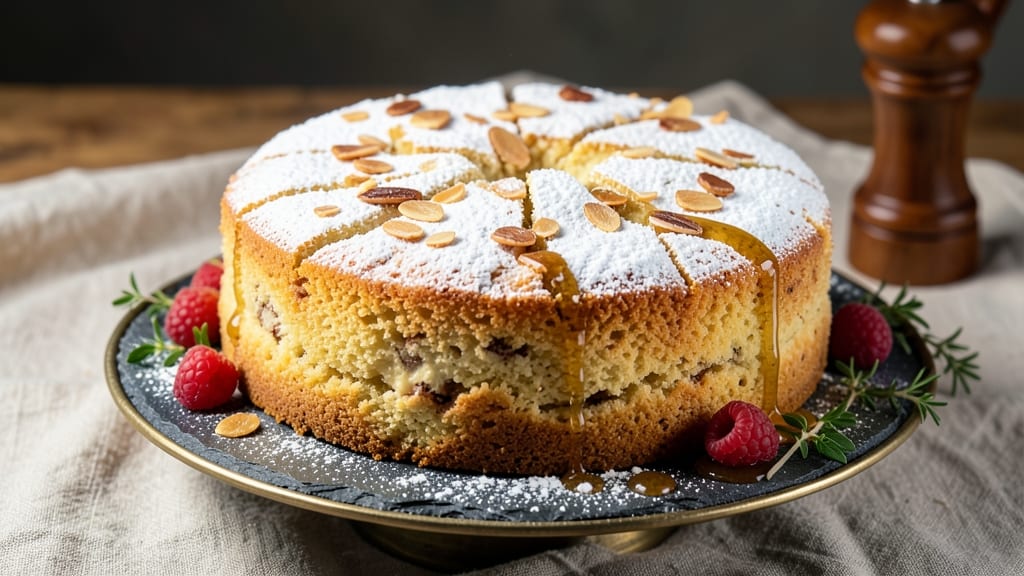
This almond cake recipe without eggs delivers moist, tender layers that rival traditional versions—all thanks to aquafaba's secret binding power. 💛 I developed this after years of perfecting egg-free baking, ensuring every slice stays rich and fluffy without compromise.
The key lies in precise measurements and gentle folding to maintain that signature almond cake texture.
What makes this recipe truly special is how aquafaba (chickpea brine) replaces eggs entirely while creating a light, airy crumb. Unlike other substitutes, it whips into stable peaks that mimic egg whites' structure, giving you that classic cake rise without any gummy aftertaste.
The almond flour base adds natural sweetness and a delicate crumb that pairs beautifully with the moist interior.
By the time it emerges from the oven, you'll have a golden-domed cake with a tender crumb that's moist for days when stored properly. The subtle almond flavor shines through without overpowering, making it perfect for special occasions or when you need a showstopping dessert that's also allergy-friendly.
This version proves egg-free baking can be just as impressive as traditional recipes.
The beauty of this recipe extends beyond its texture—it's also incredibly versatile. Serve it plain for an elegant dessert, or layer with lemon curd and fresh berries for a restaurant-worthy presentation.
The foolproof method ensures consistent results every time, making it ideal for both beginners and experienced bakers looking to expand their egg-free repertoire.
Ingredients for almond cake recipe without eggs
Precision-measured ingredients transform chickpea brine into a fluffy, moist almond cake with restaurant-quality texture.
| Ingredient | Amount | Notes |
|---|---|---|
| Aquafaba (Chickpea Brine) 🥫 | 1 ½ cups | Freshly strained from canned chickpeas |
| Almond Flour 🌰 | 2 ½ cups | Finely ground, unsweetened preferred |
| Granulated Sugar 🍚 | 1 ½ cups | Organic preferred for refined texture |
| Unsalted Butter 🧈 | 1 cup | Cold, cubed for creaming |
| Vanilla Extract 🌿 | 2 tsp | Pure Madagascar bourbon preferred |
| Baking Powder 🧂 | 1 tbsp | Aluminum-free for delicate rise |
| Salt 🧂 | ½ tsp | Fine sea salt preferred |
| All-Purpose Flour 🌾 | ½ cup | For structural support |
| Almond Extract 🌰 | 1 tsp | Pure almond flavor |
| Lemon Zest 🍋 | 1 tbsp | Freshly grated for brightness |
| Lemon Juice 🍋 | 2 tbsp | Freshly squeezed |
| Powdered Sugar 🍚 | ¼ cup | For final dusting |
The aquafaba is the game-changer here—freshly strained from canned chickpeas (not the water from cooked beans) ensures maximum stability when whipped. Bob's Red Mill almond flour delivers the finest texture, but any unsweetened brand works if sifted first. For the butter, Plugrá brand is my go-to for consistent performance, though any high-fat unsalted butter will suffice. The almond extract must be pure—McCormick's brand guarantees no artificial aftertaste. When sourcing, check the almond flour's fat content; higher fat yields richer crumb but may require slight sugar reduction.
No aquafaba on hand? 1/2 cup unsweetened applesauce plus 1 tbsp lemon juice mimics the moisture, though texture will be slightly denser. Substituting almond flour? Oat flour at 1:1 ratio works but lacks the signature nutty depth. For the sugar, coconut sugar can replace granulated at a 1:1 ratio, though it may darken the crust slightly. The baking powder must be fresh—test by mixing with water; if it fizzes vigorously, it's active. For extra moisture, add 1 tbsp aquafaba if your kitchen is particularly dry. The lemon zest should be organic when possible to avoid wax residue affecting flavor.
Store the cake in an airtight container with parchment between layers to maintain moisture for up to 5 days. For longer storage, freeze slices wrapped individually—they thaw beautifully with 10 minutes at room temperature. The powdered sugar topping should be applied just before serving to prevent clumping. This cake's texture improves overnight, so bake it the day before for perfect slices at your gathering. For make-ahead prep, assemble the batter and refrigerate overnight—it develops deeper flavor when baked cold.
Why You'll Love This Recipe
- No-Fuss Whip-Up: I swear by this—just whisk the aquafaba until it’s fluffy (like meringue, but with zero fuss), fold in the almond flour, and bake. No eggs to crack, no overmixing to stress over. My lazy Sunday mornings thank me.
- Buttery Almond Bliss: That ratio of melted butter to sugar? It’s where the magic happens—rich but not heavy, with vanilla cutting through like a warm hug. Honestly, the first slice makes me question why I ever bought boxed cake.
- Crowd-Pleaser Flex: Serve it at brunch with berries, slice it for book club with tea, or pack it for lunch—it’s the one dessert that works everywhere. (Yes, even when my in-laws show up unannounced.)
- Pantry Goldmine: Almond flour and aquafaba? Both last forever, and you’re using chickpea brine that’d otherwise go to waste. Budget-friendly, zero guilt, and my wallet’s been happier since I started making this.
Step-by-step instructions for almond cake without eggs
Master the science of aquafaba for a perfectly moist, tender almond cake that rivals traditional recipes.
🍳 Step 1: Whip Aquafaba to Stiff Peaks
Pour the 1.5 cups Aquafaba (Chickpea Brine) into a clean, grease-free mixing bowl. Using a stand mixer fitted with the whisk attachment, beat on high speed for 8-10 minutes until the aquafaba forms stiff peaks that hold their shape when the whisk is lifted. You'll see it go from frothy to thick and glossy—like meringue but with a more liquid consistency.
Here's the thing—this step is non-negotiable for moisture. I've found that using freshly strained aquafaba (strained through a fine-mesh sieve) gives the best results. If you see any foam or bubbles on top of the canned chickpeas, skim them off before using. The aquafaba should be at room temperature for best volume.
👨🍳 Step 2: Cream Butter and Sugar Together
In a separate large mixing bowl, combine the 1 cup Unsalted Butter (cold, cubed) and 1.5 cups Granulated Sugar. Using the paddle attachment, beat on medium speed for 3-4 minutes until the mixture is light and fluffy, with ribbons forming when the beaters are lifted. The butter should be completely incorporated and the mixture should nearly double in volume.
This creaming process is crucial for aerating the cake. I press down gently on the butter with a spatula during the first minute to help break it down evenly. If the mixture looks curdled at all, don't worry—it will come together when we add the dry ingredients. The butter should be cold but not frozen, creating perfect pockets of air for that tender crumb.
🥘 Step 3: Combine Wet Ingredients
Add the whipped aquafaba to the butter mixture in three additions, mixing on low speed after each addition until just combined. Then add the 2 tsp Vanilla Extract, 1 tsp Almond Extract, 2 tbsp Lemon Juice, and 1 tbsp Lemon Zest, mixing on low speed until evenly distributed. The batter should be smooth and well incorporated—no streaks of aquafaba should remain.
This is where the lemon's acidity comes into play. The citrus brightens the almond flavor while helping to stabilize the aquafaba's structure. I like to press the lemon zest against the grater to remove any bitter white pith. The batter should be thick but pourable—if it's too thick, you can add 1-2 tablespoons of warm water to loosen it slightly.
👨🍳 Step 4: Fold in Dry Ingredients
In a medium bowl, whisk together the 2.5 cups Almond Flour, 0.5 cup All-Purpose Flour, 1 tbsp Baking Powder, and 0.5 tsp Salt. Gradually add this dry mixture to the wet ingredients, folding gently with a spatula until just combined. Be careful not to overmix—you should still see some dry flour streaks. The batter will be thick and slightly grainy.
The almond flour gives this cake its signature texture and flavor, but it can be dense if not handled properly. The all-purpose flour provides just enough structure to prevent cracking. I use a gentle folding motion to maintain as much air as possible in the batter. If the batter seems too thick after mixing, you can add 1-2 tablespoons of warm water to help it flow more easily into the pan.
🔥 Step 5: Bake to Golden Perfection
Preheat your oven to 350°F and grease a 9-inch round cake pan (or line it with parchment paper). Pour the batter into the prepared pan and smooth the top with a spatula. Bake for 40-45 minutes until the top is golden brown and a toothpick inserted in the center comes out clean. The cake should spring back slightly when pressed gently in the center.
I've found that baking times can vary slightly depending on your oven. If the top browns too quickly, tent the cake with foil after 25 minutes to prevent over-browning while ensuring it cooks through. The cake is done when it pulls away slightly from the edges of the pan and has a beautiful golden hue. Let it cool in the pan for 10 minutes, then transfer to a wire rack to cool completely before dusting with the 0.25 cup Powdered Sugar.
Pro Tips For Making Almond Cake Recipe Without Eggs
- Whisk Aquafaba First: I learned this the hard way—whipping the chickpea brine before adding sugar makes a world of difference. The foam stabilizes better when you beat it alone for 2-3 minutes first, then gradually add the sugar. Skip this, and your cake might end up dense instead of light.
- Sift Almond Flour Twice: Almond flour packs like crazy, and clumps ruin texture. Sift it twice—once before mixing, once after—using a fine-mesh sieve. This isn’t the prettiest method, but it’s the tastiest. (Yes, even if you’re impatient like me.)
- Butter at Room Temp: Cold butter = tough cake. Let that unsalted block sit out for 1-2 hours until it’s soft enough to press with a finger but not greasy. If you’re in a rush, microwave it in 10-second bursts, then stir to redistribute the heat. Uneven melting = uneven texture.
- Don’t Overbake the Crust: The top will darken fast, but the center stays undercooked. Pull the cake when it’s just set in the middle (a toothpick should come out with a few moist crumbs, not wet batter). Every minute past that point dries out the almond flavor. (Your future self will thank you.)
Serving suggestions for leftovers
Classic Serving Style
Serve this almond cake warm with a dusting of powdered sugar and a few fresh berries—raspberries or blackberries work beautifully. The warm cake contrasts perfectly with the cool fruit, enhancing the natural almond flavor. I like to slice it into 1-inch thick pieces for easy serving at gatherings. 🍓
Creamy Lemon Curd Layer
Elevate your presentation by spreading a thin layer of homemade lemon curd between two slices. The tangy citrus cuts through the richness of the almond cake, creating a restaurant-worthy dessert.
For extra flair, top with a dollop of whipped cream and a sprinkle of toasted almond slivers. Store-bought curd works in a pinch, but homemade delivers brighter flavor.
Warm Spiced Compote
Pair slices with a warm spiced compote made from poached pears or apples simmered with cinnamon, cardamom, and a touch of vanilla. The warm, fragrant compote adds depth and complements the cake's delicate almond notes.
Serve in small bowls alongside the cake for a sophisticated touch. This works especially well during fall and winter gatherings.
Coffee or Tea Pairings
This cake's subtle sweetness pairs wonderfully with espresso or chai tea. For a coffee twist, serve with a shot of cold brew or a small cup of dark roast. The bitterness of the coffee balances the cake's richness.
If you prefer tea, a spiced chai or Earl Grey enhances the almond flavor beautifully. Avoid overly sweet drinks that might overpower the cake's delicate taste.
Make-Ahead Serving Tips
For events, bake the cake 1-2 days ahead and store it in an airtight container at room temperature. Reheat slices in the microwave for 10-15 seconds to restore warmth before serving. If freezing, wrap individual slices in plastic wrap and store for up to 3 months.
Thaw at room temperature for 30 minutes before serving. This makes it perfect for holiday desserts or last-minute gatherings.
Garnish Like a Pro
Add final flair with edible flowers like violets or pansies, or a sprinkle of crushed pistachios for color and crunch. A drizzle of dark chocolate ganache (melt ½ cup dark chocolate with ¼ cup heavy cream) adds a luxurious finish.
Keep garnishes simple to let the cake's natural flavors shine. The key is balance—don't overpower the delicate almond taste with heavy toppings. ✨
Nutrition facts
Frequently asked questions
Why does this almond cake need aquafaba instead of eggs?
Aquafaba mimics eggs' binding and leavening properties perfectly for this recipe. Its protein structure creates stiff peaks that whip air into the batter, just like egg whites, while its slight acidity helps tenderize the almond flour. The result is a cake with that classic moist, airy texture without any eggy aftertaste.
Can I substitute aquafaba with something else if I don't have it?
Yes! Try 1/2 cup unsweetened applesauce plus 1 tbsp lemon juice for moisture, though the texture will be slightly denser. For structure, 1 tbsp ground flaxseed mixed with 2.5 tbsp water (let sit for 5 minutes) works but may make the cake slightly heavier. The aquafaba's whipping ability is hardest to replicate—these alternatives compensate differently.
How do I know when the cake is fully baked?
Look for three signs: golden brown top, a toothpick inserted in the center comes out clean (or with just a few moist crumbs), and the edges pull away slightly from the pan. The cake should also spring back gently when pressed in the center. If it browns too quickly, tent with foil after 25 minutes to prevent over-browning.
Will this cake taste nutty like almond extract?
Not at all! The recipe uses just 1 tsp almond extract (pure, not imitation) to enhance the natural almond flavor from the 2.5 cups almond flour. The extract adds depth without overpowering—think of it as a whisper of almond rather than a shout. The lemon zest balances any richness, keeping the flavor bright and delicate.
Can I make this cake in a different pan shape?
Yes, but adjust baking time slightly. For a 9x13-inch pan, bake 30-35 minutes (cover with foil if browning too fast). For 6-inch rounds, bake 30-35 minutes (check at 25 minutes). The key is to use the same batter volume—reduce pan size means thinner layers, which bake faster. Always use parchment paper for easy removal.