
Desserts
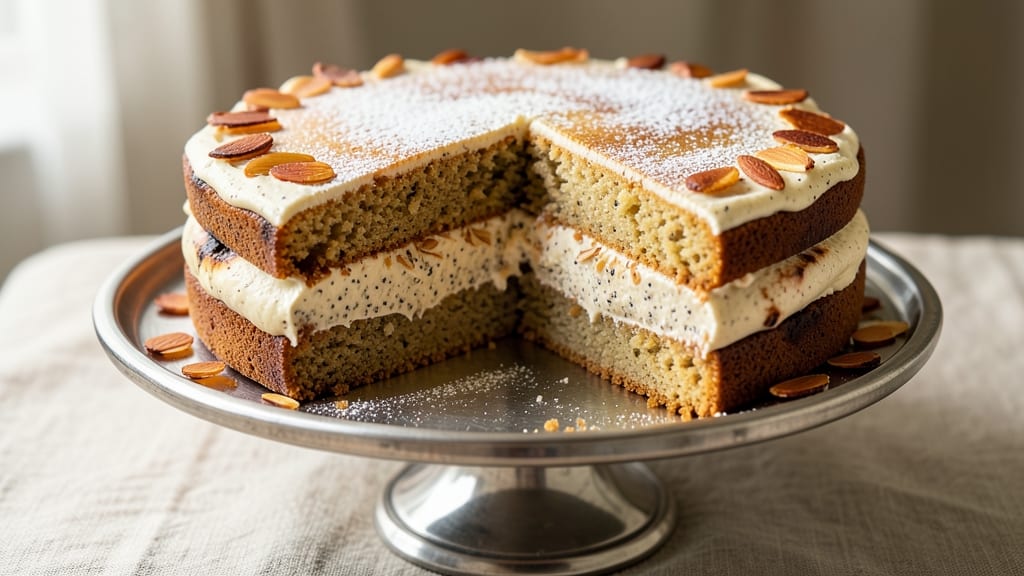
This almond poppyseed cake recipe delivers moist vanilla layers with nutty crunch in every bite—no dry crumbs here. 🌟 The secret lies in combining toasted almonds and poppyseeds for texture while keeping the crumb tender through careful mixing and a simple syrup trick.
I developed this version after years of baking failures (yes, I’ve burned cakes), and it’s now my go-to for gatherings or solo indulgence.
The magic happens in the batter: almonds toasted just until fragrant, poppyseeds folded in at the last moment to preserve their crunch, and a touch of sour cream to keep the crumb light.
Baking at 350°F ensures even golden-brown layers without overbrowning, while a quick glaze ties everything together. This isn’t your grandmother’s dense cake—it’s restaurant-quality with minimal effort.
What you’ll end up with is a cake that’s rich yet airy, with pockets of buttery almond flavor and tiny poppyseed surprises in every slice. The glaze adds a glossy finish that makes it look (and taste) like you spent hours decorating.
Serve it warm with vanilla ice cream or let it cool for elegant slices—either way, it disappears fast.
For extra flair, dust with powdered sugar or add a sprinkle of crushed almonds on top. The recipe scales perfectly for parties or leftovers (if there are any). Let’s bake this crowd-pleaser!
Ingredients for almond poppyseed cake
Toasted almonds, poppyseeds, and buttery layers—this cake delivers restaurant-quality crunch and moisture with just 15 simple ingredients.
| Ingredient | Amount | Notes |
|---|---|---|
| All-Purpose Flour 🌾 | 2 cups | Sifted for light texture |
| Unsalted Butter 🧈 | 1 cup | Softened to room temperature |
| Granulated Sugar 🍚 | 1 ½ cups | Superfine preferred for smoothness |
| Light Brown Sugar 🍚 | ½ cup | Packed for moisture |
| Large Eggs 🥚 | 2 whole | Room temperature for even mixing |
| Sour Cream 🥛 | ½ cup | Full-fat for richness |
| Vanilla Extract 🌿 | 2 tsp | Pure, high-quality extract |
| Whole Milk 🥛 | ½ cup | Room temperature for smooth batter |
| Slivered Almonds 🥜 | 1 cup | Toasted until fragrant |
| Poppyseeds 🌱 | ½ cup | Packed for even distribution |
| Baking Powder 🧂 | 1 ½ tsp | Freshly measured for lift |
| Salt 🧂 | ½ tsp | Fine sea salt preferred |
| Powdered Sugar 🍚 | ½ cup | For glaze, sifted smooth |
| Heavy Cream 🥛 | ¼ cup | Chilled for glaze |
| Lemon Juice 🍋 | 1 tbsp | Freshly squeezed for brightness |
The almonds and poppyseeds are game-changers here. Toast the slivered almonds in a dry pan until golden and fragrant (about 5 minutes)—this deepens their flavor and prevents them from getting soggy. Trader Joe's and Whole Foods carry pre-slivered almonds if you're short on time, but whole almonds toasted and pulsed in a food processor work too. Poppyseeds? Bob's Red Mill sells them in bulk, and they keep for months in a cool, dark place. If you can't find poppyseeds, sesame seeds at half the amount add a different but still lovely crunch. The butter needs to be softened but not melted—press your finger in it and it should leave a slight indent. I always use Land O'Lakes unsalted butter because it's consistent, but any good-quality brand works.
No sour cream? Plain Greek yogurt works in a pinch, but it'll be slightly tangier. The vanilla extract is where you shouldn't skimp—Nielsen-Massey or McCormick are reliable brands. If you're out of brown sugar, substitute an extra 0.25 cup granulated sugar plus 1 tbsp molasses for that caramel depth. The milk should be room temperature—cold milk makes the batter lumpy. For the glaze, if you're not a fan of lemon, orange juice or even vanilla extract adds brightness without overpowering. And if you're worried about the cake being too dense, trust me—the sour cream and careful mixing keep it light as air. The secret's in the folding the poppyseeds in last so they stay crisp.
This cake keeps beautifully—3 days at room temperature covered loosely, or 5 days refrigerated wrapped in plastic. For extra-long storage, freeze it up to 3 months (just thaw at room temp before serving). The glaze sets quickly, so assemble it right before serving if you want that glossy finish. I like to dust the top with powdered sugar right after baking while it's still warm—it melts slightly and gives that bakery-style look. Leftovers? Slice and freeze individual portions for quick treats later. And if you make a double batch, it's perfect for parties—just scale up the glaze ingredients too.
Why You'll Love This Recipe
- No Mixer Needed: I swear by this—creaming butter and sugars by hand gives it that just-right texture, but even if you’re in a hurry, a sturdy fork and some elbow grease do the trick. Honestly, the cake’s tender crumb is proof you don’t need fancy tools.
- Buttery-Almond Magic: That combo of brown sugar and toasted almonds? It’s like a warm hug in cake form. The poppy seeds add a tiny crunch that balances the richness, and the butter—oh, the butter—makes every bite feel indulgent without being heavy.
- Brunch or Dessert Star: Serve it plain with tea for a sophisticated morning treat, or drizzle with honey and a sprinkle of flaky salt for an after-dinner showstopper. Between us, it’s the one cake that works at any time of day—no judgment.
- Leftovers That Last: This cake stays moist for days if you store it properly (wrapped tightly, thank you very much). I’ve had slices for breakfast, packed them in lunches, and even reheated them for a quick snack—versatile, budget-friendly, and always delicious.
Step-by-step instructions for almond poppyseed cake
Here's how to bake a tender, nutty cake with perfect texture and crunch.
👨🍳 Step 1: Toast the Almonds and Poppyseeds
Preheat your oven to 325°F and spread the 1 cup slivered almonds and ½ cup poppyseeds evenly on a baking sheet. Toast for 8-10 minutes until the almonds are fragrant and the poppyseeds look slightly darker. Watch them carefully—they burn quickly!
This toasting step is crucial for developing their natural flavors and preventing any bitterness in the final cake. Let them cool completely before using. I like to spread them on a wire rack to cool faster, which also helps prevent them from sticking together.
🍳 Step 2: Cream Butter and Sugars Together
In a large mixing bowl, combine the 1 cup softened unsalted butter, 1½ cups granulated sugar, and ½ cup packed light brown sugar. Beat with an electric mixer on medium-high speed for 3-4 minutes until the mixture is light and fluffy, with ribbons forming when the beaters are lifted.
This creaming process incorporates air into the butter, which creates a lighter texture in the finished cake. I press down on the butter briefly with a spatula during the first minute to ensure it's fully softened—this prevents lumps that can lead to dense cake.
👨🍳 Step 3: Add Eggs and Mix Well
Add the 2 large eggs one at a time, mixing well after each addition. Then stir in the ½ cup sour cream, 2 teaspoons vanilla extract, and ½ cup room-temperature whole milk. Mix until just combined—you shouldn't see any streaks of egg or milk remaining.
Here's where it gets fun—toss in the cooled toasted almonds and poppyseeds. Fold them in gently with a spatula to distribute evenly. Overmixing now can develop gluten and make the cake tough, so be careful not to overwork the batter.
🥘 Step 4: Combine Dry Ingredients and Fold
In a separate bowl, whisk together the 2 cups sifted all-purpose flour, 1½ teaspoons baking powder, and ½ teaspoon salt. Gradually add this dry mixture to the wet ingredients, mixing on low speed just until combined. Stop mixing as soon as the flour disappears—you want to preserve those air pockets we created earlier.
The batter should be thick but pourable. If it looks too stiff, add 1-2 tablespoons whole milk to loosen it. This is your final check for moisture balance—too thick and the cake will be dense; too thin and it might not rise properly.
🔥 Step 5: Bake to Golden Perfection
Pour the batter into two greased and floured 8-inch round cake pans. Smooth the tops with a spatula. Bake in the preheated 325°F oven for 30-35 minutes, or until a toothpick inserted in the center comes out clean. Rotate the pans halfway through baking for even browning.
Once baked, let the cakes cool in the pans for 10 minutes, then transfer to a wire rack to cool completely. The edges should be golden brown, and the top should spring back when gently pressed—not sticky or gummy.
🍰 Step 6: Prepare the Lemon Glaze
While the cakes cool, make the glaze by whisking together the ½ cup powdered sugar, ¼ cup chilled heavy cream, and 1 tablespoon fresh lemon juice until smooth. The mixture should coat the back of a spoon but still be pourable.
This glaze adds a bright, tangy contrast to the rich cake. I like to strain it through a fine-mesh sieve to ensure a silky finish. If it's too thick, add 1-2 drops water to reach the right consistency.
🍽️ Step 7: Assemble and Serve
Once the cakes are completely cool, level the tops if needed. Place one cake layer on a serving plate and spread half the glaze over the top. Add the second layer and drizzle the remaining glaze over the top and sides. Let the glaze set for 10 minutes before serving.
Slice with a warm knife for clean cuts, and serve with fresh berries or a dollop of whipped cream. The contrast of the nutty cake with the bright lemon glaze makes every bite special—just as promised!
Pro Tips For Making Almond Poppyseed Cake
- Cream Butter Properly: Use a wooden spoon or dough whisk to beat the butter and sugars until it’s pale and fluffy—about 3-5 minutes. I learned the hard way that skipping this step leaves the cake dense; the butter needs to lighten up to hold air for that signature tender crumb.
- Toast Poppyseeds First: Dry-toast the poppyseeds in a skillet over medium-low heat for 2-3 minutes until fragrant. This banishes that raw, bitter note they sometimes have—my grandmother swore by it, and the cake’s flavor is noticeably brighter.
- Don’t Overmix the Batter: Stop folding in the almonds and flour as soon as they’re just combined—overmixing develops gluten and turns the cake tough. Two turns of a spatula is all it takes; I used to overdo it and wondered why the texture was off.
- Rotate the Pan: Swap the cake pans halfway through baking to even out browning. I was skeptical until I tried it—now my cakes rise uniformly, and no one slice is underdone while another burns. Works for both conventional and convection ovens.
Storing and reheating your leftovers
Room Temperature Storage
This cake stays fresh and moist at room temperature for up to 3 days when stored in an airtight container or wrapped tightly in plastic wrap. I like to place it on a wire rack inside a cake carrier to allow air circulation, which prevents sogginess.
The lemon glaze actually helps preserve freshness by creating a slight moisture barrier. 🌟
For extra protection, dust the top with powdered sugar right after baking—this forms a delicate crust that locks in moisture. If you're serving slices over multiple days, cover each layer separately to prevent drying between cuts.
The nutty flavors intensify slightly as the cake sits, making it even more delicious the next day.
Refrigerator Storage
Extend the cake's life to 5 days by refrigerating it in an airtight container. The cold temperature helps maintain the glaze's glossy finish and keeps the almonds from becoming too soft.
I recommend wrapping each layer individually with plastic wrap before placing them in the container to prevent any moisture transfer that could make the cake gummy.
Let the cake sit at room temperature for 10-15 minutes before serving after refrigeration—this helps the texture soften slightly and prevents a chilled bite.
The cold temperature can make the glaze set more firmly, so a quick warm-up in the microwave (10-second bursts) works well if you're in a hurry. 💫
Freezer Storage Tips
For long-term storage, freeze the cake layers (without glaze) for up to 3 months in freezer-safe wrap or heavy-duty plastic bags. I like to place parchment paper between layers to prevent sticking. Thaw overnight in the refrigerator before assembling with fresh glaze—this keeps the texture perfect and prevents sogginess.
If you prefer to freeze the fully assembled cake, wrap it tightly in plastic wrap followed by aluminum foil. The glaze will become cloudy after freezing but can be refreshed with a quick brush of warm water before serving.
For individual portions, slice the cake before freezing and store in a single layer in a freezer bag—this makes for perfect single-serving treats. ❄️
Reheating Methods
Warm slices in the microwave for 8-10 seconds on medium power to restore the glaze's shine and soften the cake slightly. For a more even warm-through, place slices on a baking sheet and heat in a 300°F oven for 5-7 minutes.
This method is ideal for parties where you want to serve warm cake.
If you've refrigerated the cake, reheating helps restore the original texture. I avoid the microwave for fully refrigerated slices—it can make the glaze melt unevenly. Instead, I use the oven method for even heating.
Pro tip: Brush any reheated slices with a tiny bit of warm water before serving to refresh the glaze's appearance. 🔥
Nutrition facts
Frequently asked questions
Can I make this cake without an oven?
This recipe requires baking, but you could try a stovetop version using a cake pan on low heat with a heat diffuser. However, the texture won't be identical—the oven ensures even baking and proper rise. For a true alternative, consider a steamed cake using a cake steamer, though the flavor will differ slightly. The nutty elements still shine through!
Why did my cake turn out dense? Overmixing the batter or using cold ingredients are common culprits.
Can I substitute almonds or poppyseeds?
For the almonds, try pecans or walnuts (toasted and chopped), though the flavor will differ. For poppyseeds, sesame seeds or sunflower seeds work well at the same amount. If you're avoiding nuts entirely, omit them and add 1 extra teaspoon of vanilla extract for depth. The texture will change, but the cake will still be delicious!
How do I make this cake gluten-free?
Replace the all-purpose flour with a 1:1 gluten-free baking flour blend (like Bob's Red Mill 1-to-1). Add ½ teaspoon xanthan gum to help bind the texture. For best results, also use a gluten-free measuring system (like rice flour cups) to avoid compaction. The cake will still have that lovely crumb, though it may be slightly denser than the original.
Can I bake this in a different pan size?
Yes! For an 8-inch round pan, use the recipe as written (divided between 2 pans). For a 9-inch pan, reduce baking time by 5-7 minutes and check for doneness early. If using a loaf pan, bake at 325°F for 50-55 minutes. Just