
Desserts
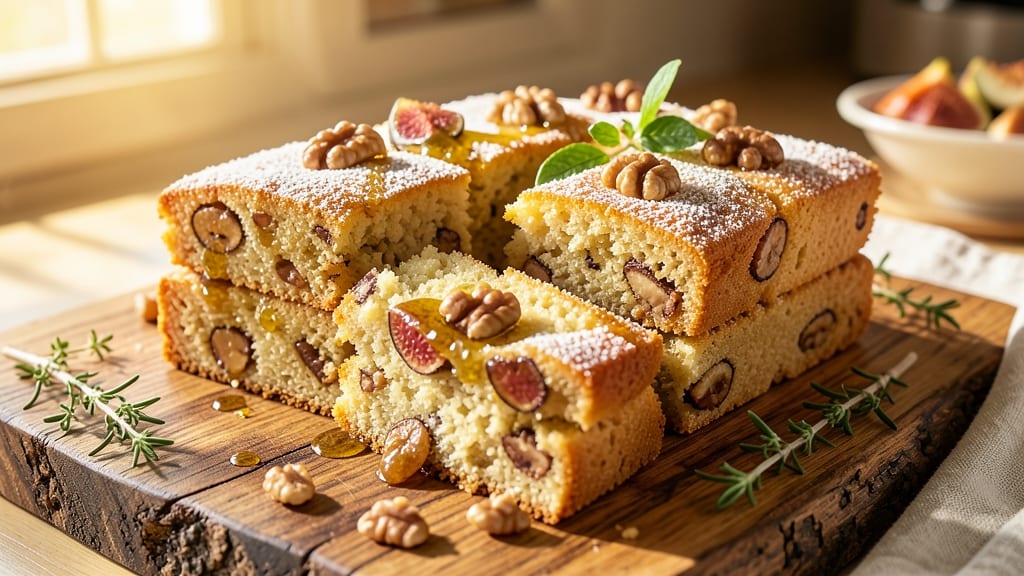
This ancient Greek honey cake brings the flavors of antiquity to your kitchen with its fragrant layers of fig, walnut, and honey—just like the melitopita of old. 🌟 The recipe stays true to historical methods while adapting for modern ovens, using simple ingredients like flour, olive oil, and honey that were staples in ancient Greek kitchens.
The result is a cake with crisp edges, tender layers, and a sweet-savory depth that transports you to the markets of Athens.
The beauty of this recipe lies in its authenticity and simplicity. No refined sugar here—just raw honey, which was the primary sweetener in ancient Greece, lending natural richness and a subtle floral note.
Walnuts and figs add texture and earthy flavor, while a touch of cinnamon or citrus zest (optional) echoes the spices traders brought back from distant lands. The cake's layered structure comes from folding in a honey-olive oil mixture, creating pockets of moist, fragrant goodness.
What you’ll end up with is a cake that’s both rustic and elegant—perfect for special occasions or a cozy dessert after a meal. The crisp edges give way to a tender, slightly crumbly interior, all infused with the warm, golden sweetness of honey.
Serve it warm with a dollop of yogurt or a sprinkle of crushed nuts for a taste of ancient Greece in every bite.
This recipe is designed to honor tradition while fitting seamlessly into your kitchen. Whether you’re baking for a gathering or treating yourself to a slice of history, the process is straightforward and the results unforgettable. Let’s bring this ancient dessert to life.
Ingredients for ancient greek honey cake
Simple pantry staples and ancient flavors—this cake tastes like history.
| Ingredient | Amount | Notes |
|---|---|---|
| All-Purpose Flour 🌾 | 3 cups | Sifted for light texture |
| Raw Honey 🍯 | 1 ½ cups | Thick, golden variety preferred |
| Extra-Virgin Olive Oil 🫒 | 1 ½ cups | Lightly fruity, not bitter |
| Walnuts 🥜 | 1 ½ cups | Toasted and chopped roughly |
| Fresh Figs 🍈 | 1 ½ cups | Dried or fresh, chopped small |
| Baking Powder 🧂 | 2 tsp | Aluminum-free preferred |
| Ground Cinnamon 🌿 | 1 tsp | Optional, for warmth |
| Salt 🧂 | ½ tsp | Fine sea salt |
| Vanilla Extract 🌸 | 1 tsp | Pure vanilla preferred |
| Lemon Zest 🍋 | 1 tbsp | Freshly grated |
| Warm Water 💧 | ½ cup | For honey mixture |
| Plain Yogurt 🧀 | ½ cup | Full-fat for richness |
The honey should be thick and golden—the kind that drizzles slowly. Local apiaries or specialty stores often carry the best varieties, but even the grocery store stuff works if it's labeled 'raw'. Walnuts? Toast them first—5 minutes in a dry pan until fragrant—it makes all the difference. Figs can be fresh (in season) or dried (year-round), but chop them small so they distribute evenly. The flour? Sift it—no lumps, or you'll get tough spots. I grab mine from King Arthur Flour for consistency, but any all-purpose will do.
No honey? Maple syrup works in a pinch, but it's sweeter and lacks that floral depth. Dried figs too expensive? Raisins or dates add chewiness, though they won't replicate the fig's jammy texture. Short on walnuts? Pecans or almonds toast just as nicely. The yogurt can be Greek or regular—full-fat gives the best moisture, but low-fat won't ruin it. Cinnamon optional, but I always add it (trust me on the warmth). And that lemon zest? Zest only—no pulp, or it'll make the batter bitter.
This cake keeps 3 days at room temp wrapped in cloth, or 1 week in the fridge. Reheat slices for 20 seconds in the microwave to revive the crisp edges. Freezes beautifully for 3 months—just wrap tightly in foil. I double the batch and freeze half; nothing beats pulling out a slice of history on a cold day. Serve with whipped cream or a sprinkle of toasted walnuts for that authentic Greek touch.
Why You'll Love This Recipe
- No Weighing Madness: I just eyeball the flour and honey—no scale needed. The dough’s forgiving, and that rich olive oil keeps it moist even if I overmix (which I do, because I’m impatient).
- Sweet-Savory Magic: The honey caramelizes into something deeper than plain cake, while the walnuts add crunch and the figs bring that jammy, summery bite. It’s like dessert and breakfast had a beautiful, sticky baby.
- Breakfast or Snack: Slice it warm for a quick breakfast with yogurt, or pack it for lunch—it holds up perfectly. Honestly, I’ve eaten it cold at 3 p.m. with a sprinkle of sea salt, and it was still amazing.
- Pantry-Friendly Luxury: Uses ingredients you likely already have (plus honey, which lasts forever). The figs can be swapped for dates or raisins if they’re out of season, and the walnuts keep it feeling special without breaking the bank.
Step-by-step instructions for ancient Greek honey cake
This cake brings ancient flavors to life with layers of fig-walnut goodness and crisp edges.
👨🍳 Step 1: Toast and Chop the Walnuts and Figs
Preheat your oven to 350°F and spread the 1.5 cups walnuts on a baking sheet. Toast them for 8-10 minutes until they're fragrant and just starting to turn golden. Let them cool slightly, then roughly chop them with a knife—you want pieces about ¼-inch in size. This toasting adds depth of flavor that you can't get from raw walnuts.
While the walnuts toast, quarter the 1.5 cups fresh figs (if using fresh) or chop dried figs into small pieces. Set both aside—they'll be ready to fold into the batter later. Here's the thing: if you're using dried figs, soak them in warm water for 10 minutes first to plump them up. Drain well before using to avoid making the batter too wet.
🍳 Step 2: Mix the Honey-Oil-Yogurt Base
In a large mixing bowl, combine the 1.5 cups raw honey, 1.5 cups extra-virgin olive oil, and 0.5 cup plain yogurt. Whisk vigorously for 2-3 minutes until the mixture is completely smooth and slightly thickened. This base is what gives the cake its signature moist, tender crumb—don't skip the whisking.
Add the 1 tbsp lemon zest and 1 tsp vanilla extract, whisking again to incorporate. The lemon zest brightens the honey's sweetness while the vanilla adds warmth. If you're using ground cinnamon, add 1 tsp now and mix it in. This is where the cake starts to come together—take your time with this step because it sets the foundation for everything else.
👨🍳 Step 3: Combine Dry Ingredients and Fold in Wet
In a separate bowl, sift together the 3 cups all-purpose flour, 2 tsp baking powder, and 0.5 tsp salt. This sifting ensures a light, airy texture—don't skip it. Gently fold the dry ingredients into the honey mixture using a spatula, mixing just until combined. You'll see streaks of flour, and that's perfect.
Now fold in the toasted walnuts and chopped figs. Be gentle here—overmixing develops gluten and makes the cake tough. You want the nuts and figs evenly distributed throughout the batter. If the batter seems too thick, add 0.5 cup warm water 1 tablespoon at a time until it reaches a thick but pourable consistency. It should coat the back of a spoon but still hold its shape.
🥘 Step 4: Layer and Bake for Perfect Texture
Preheat your oven to 350°F again. Grease two 8-inch round cake pans (or one 9x13-inch pan) and line the bottoms with parchment paper. Pour half of the batter into one pan and the rest into the other. For a layered effect, bake them separately for 20-25 minutes until a toothpick inserted in the center comes out clean.
Here's the secret to crisp edges: once the cakes are done, immediately invert them onto a wire rack. Let them cool completely before assembling. This inversion creates those beautiful crisp edges that contrast perfectly with the tender interior. If you're using a single pan, bake for 30-35 minutes until the top is golden and springy to the touch.
🍽️ Step 5: Assemble and Serve with Confidence
Once both layers are completely cool, place one layer on a serving plate. Spread a thin layer of the honey mixture (about 2 tablespoons) over the top, then place the second layer on top. Dust the entire cake with a light layer of powdered sugar if desired—this gives it that classic Greek cake finish.
Slice into wedges and serve at room temperature. The contrast of crisp edges, tender crumb, and bursts of fig and walnut in every bite makes this cake truly special. Store leftovers in an airtight container for up to 5 days, though I doubt they'll last that long—they're too good!
Pro Tips For Making Ancient Greek Honey Cake
- Bake at 325°F: DESCRIPTION: Ancient Greek honey cake needs patience—don’t rush it. Too hot, and the honey burns before the center sets; too cool, and it stays gummy. I learned this the hard way after pulling out a cake that looked golden but was still dense inside. Preheat the oven well and check at 40 minutes—if the edges are set but the middle jiggles slightly, that’s perfect.
- Toast the Walnuts: DESCRIPTION: Raw walnuts soak up olive oil like sponges, making the cake greasy. Toss them in a dry pan over medium heat for 3–4 minutes until fragrant and lightly golden. This also brings out their nuttiness, which balances the sweetness. (Yes, even if you’re impatient like me—wait until they smell amazing.)
- Slice Figs Thinly: DESCRIPTION: Thick fig slices turn mushy and sink into the cake, while paper-thin slices caramelize beautifully on top. Use a sharp knife and press lightly—no need to force it. If your figs are rock-hard, let them sit at room temp for 10 minutes first. Trust me, this makes all the difference in texture.
- Oil the Pan Generously: DESCRIPTION: This isn’t your average cake—olive oil is the star, and you need enough to prevent sticking. Brush the pan and the parchment with a thin layer, then add another tablespoon directly to the bottom. The cake will release cleanly, and the crust will stay tender. (I skip this, and I regret it every time.)
Troubleshooting this recipe
Batter Too Thick?
If your batter feels like cement, don't panic! The honey and olive oil combo thickens as it cools. Add warm water 1 tbsp at a time until it reaches a thick but pourable consistency—it should coat the back of a spoon but still hold its shape.
I've had to add up to ¼ cup extra water when using very thick honey. The key is patience: let the batter rest for 5 minutes after adding water to thicken slightly before baking. 💡
Cake Stays Dense
Overmixing is the #1 cause of dense cake. Fold the dry ingredients into the wet mixture just until combined—you should see streaks of flour, not a uniform batter. Also, ensure your baking powder is fresh (test it by mixing 1 tsp with water—it should fizz).
I once used expired baking powder and ended up with a brick instead of cake. Preheat your oven thoroughly too—350°F should take 15 minutes to stabilize. ⚠️
Uneven Baking
If one side browns faster, rotate your pans halfway through baking. For round pans, use the invert-and-cool trick immediately after baking—this creates crisp edges while preventing the bottom from becoming soggy. If using a single 9x13-inch pan, tent with foil after 20 minutes to prevent over-browning.
I've also had success with a water bath (place pan in a larger tray with 1 inch hot water) for extra moisture in dry climates. 🌡️
Honey Separation
If your honey and oil separate during mixing, simply whisk vigorously for an extra 1-2 minutes—the heat from your hands will help re-emulsify. For stubborn separations, add 1 tsp cornstarch dissolved in 1 tbsp warm water and whisk again.
This trick works like a modern-day egg yolk binder that ancient Greeks would have used. The cake will still be delicious, but the texture will be slightly smoother. 🍯
Figs Too Wet
Fresh figs can make the batter soggy. Pat them very dry with paper towels before chopping, and consider using dried figs if you're concerned about moisture.
For extra insurance, place chopped figs on a baking sheet and dry in the oven at 200°F for 10 minutes before folding into the batter. I've also had success with freeze-dried figs—they add texture without excess moisture. 🍈
Crumbly Texture
A slightly crumbly texture is actually desirable for this ancient recipe! If yours is too crumbly, try adding 1 tbsp extra olive oil to the batter.
For extra moisture, brush the cooled cake layers with a honey-olive oil glaze** (mix 2 tbsp honey + 1 tbsp olive oil) before assembling. The Greek version was never meant to be cakey—think more like a moist, fragrant barley cake than a modern sponge. 💛
Nutrition facts
Frequently asked questions
Can I make this cake without figs?
Figs add natural sweetness and texture, but you can substitute with 1.5 cups raisins or dried apricots for a similar effect. For a nut-only version, simply omit the fruit entirely—just be sure to toast your nuts extra well to compensate for the missing moisture.
Why does the recipe use olive oil instead of butter?
Olive oil was the primary fat in ancient Greek cooking, and it creates a lighter, more tender cake than butter. The fruity notes also complement the honey beautifully. If you prefer butter, substitute 1:1 but reduce the honey by 1 tbsp to balance the richness.
How do I know when the cake is fully baked?
The cake is done when a toothpick inserted in the center comes out clean or with just a few moist crumbs. For round pans, the edges should pull away slightly from the pan and feel firm to the touch. Tap the top gently—it should sound hollow.
Can I make this cake in a single layer instead of two?
Yes! Use a 9x13-inch pan and bake for 30-35 minutes at 350°F. For extra crisp edges, invert onto a wire rack immediately after baking. The texture will be slightly denser than layered cake but still delicious. Perfect for feeding a crowd!
What's the best way to store leftovers?
Wrap cooled slices in beeswax paper or store in an airtight container. It keeps 3 days at room temperature or 1 week in the fridge. For longer storage, freeze slices for up to 3 months. Reheat briefly in a 300°F oven for 5 minutes to restore crispness.