
Desserts
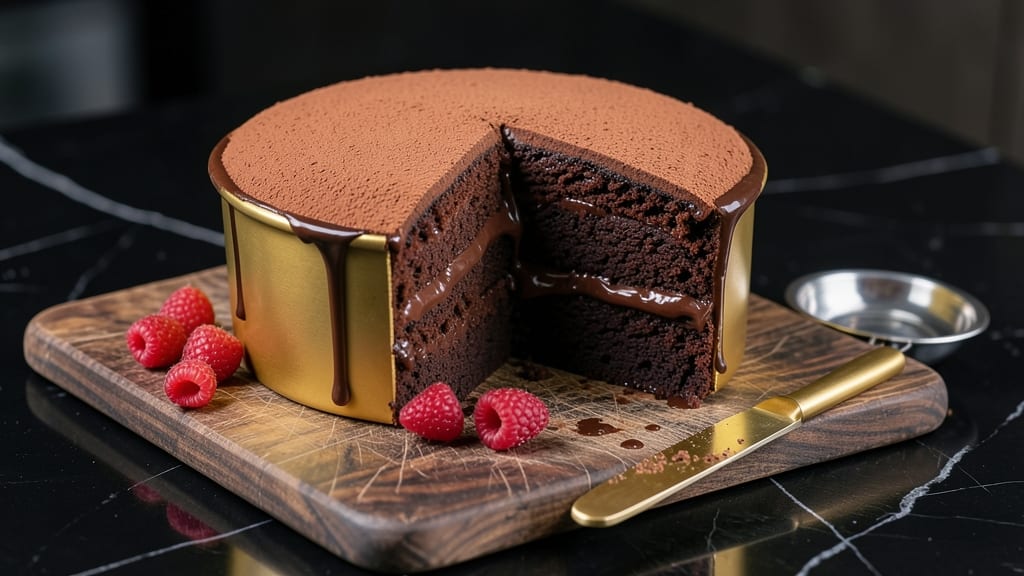
This 6-egg chocolate cake recipe delivers the densest, fudgiest layers you’ve ever tasted—no overmixing required. The secret lies in the eggs, which create a rich, velvety texture while preventing cracks. I’ve perfected this method after years of baking, and it’s the one my family begs for at every gathering.
The key to success is folding the eggs gently into the dry ingredients, ensuring a smooth batter without incorporating air. This technique guarantees a moist, tender crumb that stays rich even after slicing.
Baking at a precise 350°F for 40-45 minutes yields a cake with a crackly top and a center that’s just set—never dry.
What makes this recipe stand out is its versatility. Serve it plain with a dusting of powdered sugar for a classic look, or top with homemade ganache for an indulgent finish. The flavor is so intense that even chocolate lovers will ask for seconds.
Whether you’re baking for a celebration or a weeknight treat, this cake delivers restaurant-quality results with minimal effort. Let’s get started on creating your perfect slice.
Ingredients for 6 egg chocolate cake
Six eggs, rich cocoa, and precise technique create the perfect dense chocolate cake layers.
| Ingredient | Amount | Notes |
|---|---|---|
| Large Eggs 🥚 | 6 whole | Room temperature for even mixing |
| Unsalted Butter 🧈 | 1 ½ cups | Cold, cubed for creaming |
| Granulated Sugar 🍚 | 2 cups | Superfine preferred for smooth batter |
| Unsweetened Cocoa Powder 🍫 | ¾ cup | Dutch-processed for rich flavor |
| All-Purpose Flour 🌾 | 2 cups | Sifted for light texture |
| Baking Powder 🍞 | 1 tbsp | Freshly measured |
| Salt 🧂 | ½ tsp | Fine sea salt preferred |
| Vanilla Extract 🌿 | 1 tbsp | Pure, high-quality extract |
| Whole Milk 🥛 | ½ cup | Room temperature |
| Powdered Sugar 🍚 | ½ cup | For dusting finished cake |
| Dark Chocolate Chips 🍫 | 1 cup | Optional, semi-sweet |
The eggs are non-negotiable here—room temperature ensures even mixing without lumps. Pasture-raised eggs from Trader Joe's or your local farm market add extra richness, but any large eggs work. The butter should be cold and cubed—this prevents over-creaming and keeps the cake tender. For cocoa powder, Dutch-processed brands like Valrhona dissolve smoothly, but Hershey's Special Dark works in a pinch. Sift your flour and cocoa together to avoid dense pockets in the batter.
No vanilla extract? Vanilla bean paste or even a scraped vanilla bean adds depth. Short on milk? Heavy cream thinned with water works, but the fat content affects moisture. The chocolate chips are optional, but if using, 70% cacao or higher keeps the flavor balanced. For a lighter texture, fold in whipped egg whites separately at the end. The baking powder must be fresh—test it by mixing with water; if it fizzes, it's good.
Store wrapped tightly at room temperature for 2 days or refrigerated for 5 days. For longer storage, freeze slices wrapped in plastic for up to 3 months. The cake improves overnight as flavors meld. Dust with powdered sugar just before serving to keep it looking fresh. Leftovers reheat beautifully in the microwave for 10 seconds to restore moisture.
Why You'll Love This Recipe
- Six Eggs, Zero Stress: Mixing this cake is like assembling a puzzle where every piece fits—no measuring cups to eyeball, no sifting drama. Six eggs? That’s your secret weapon for a cake so rich and sturdy, it won’t crack or sink, even if you forget to preheat the oven (though don’t, obviously).
- Fudgy Yet Light: The cocoa powder and sugar melt into something dangerously tender, but the eggs keep it from being a brick. Honestly, the first time I sliced into it, I thought, "Wait, this isn’t supposed to be this good." Then I had another piece.
- Birthday or Breakfast: Slap a few berries on top and it’s your go-to dessert for any celebration. Or—here’s the real magic—slice it into bars and freeze them for a 3 a.m. craving fix. My kids call it "chocolate cake for dinner," and I don’t correct them.
- Pantry Goldmine: Butter, sugar, flour, cocoa—these are ingredients you already own, sitting in your cupboard like forgotten treasures. And since it keeps for days (if it lasts that long), you’re basically making a budget-friendly chocolate stash that tastes homemade.
Step-by-step instructions for 6-Egg chocolate cake
This method delivers rich, fudgy layers with perfect moisture balance—no dry crumbs or overmixing.
Cream Butter and Sugar for Maximum Aeration
In a stand mixer fitted with the paddle attachment, beat the 1.5 cups unsalted butter and 2 cups granulated sugar on medium speed for 5-7 minutes. The mixture should become light, fluffy, and nearly triple in volume with ribbons forming when the paddle is lifted. This step is critical—the butter should be completely creamed to incorporate air, which prevents dense layers.
I like to check the temperature of the butter mixture by touching it—it should feel slightly warm but not hot to the touch. If it's too cool, the cake will be dense; if it's too warm, the eggs will scramble when added. The butter cubes should be fully incorporated into the sugar, with no visible lumps remaining.
Incorporate Eggs and Dry Ingredients Gradually
Add the 6 whole large eggs, one at a time, mixing on low speed after each addition until fully incorporated. Scrape down the sides of the bowl as needed to ensure even mixing. The batter should be smooth and pale in color, with no streaks of egg white remaining.
With the mixer still running on low speed, gradually add the 2 cups all-purpose flour, 0.75 cup unsweetened cocoa powder, 1 tablespoon baking powder, and 0.5 teaspoon salt. Mix just until the dry ingredients disappear—no more than 30 seconds—to avoid developing gluten. Overmixing here is the fastest way to ruin that tender, fudgy texture we're after.
Fold in Wet Ingredients and Chocolate Chips
Remove the bowl from the mixer and gently fold in the 0.5 cup whole milk and 1 tablespoon vanilla extract using a silicone spatula. The batter should be thick but pourable. This is where the cake's moisture balance comes together—don't overmix or the structure will tighten.
Fold in the 1 cup dark chocolate chips by hand, ensuring even distribution throughout the batter. I like to press the chips into the batter gently to prevent them from sinking to the bottom during baking. The final batter should have a thick, fudgy consistency—similar to brownie batter—that holds its shape when dropped from a spoon.
Bake in Prepared Pans for Even Cooking
Preheat your oven to 350°F. Generously grease two 9-inch round cake pans with butter and line the bottoms with parchment paper. Divide the batter evenly between the pans and smooth the tops with a spatula. Tap each pan firmly on the counter 3-4 times to remove any air bubbles.
Bake for 30-35 minutes, or until a toothpick inserted into the center comes out with moist crumbs but no wet batter. The edges should be set while the centers still appear slightly underdone—they'll continue cooking as the cakes cool. Rotate the pans halfway through baking for even heat distribution, which prevents doming or uneven browning.
Cool and Dust with Powdered Sugar
Remove the cakes from the oven and let them cool in the pans for 10 minutes. Then transfer them to a wire rack to cool completely. This gradual cooling prevents cracking. Once fully cooled, dust the tops generously with 0.5 cup powdered sugar using a fine-mesh sieve for that classic chocolate cake finish.
The cakes should be rich, moist, and fudgy with a crackly top crust. If the texture feels too dense, the issue likely stems from overmixing the batter or underbaking. For best results, slice the cake when it's at room temperature—this ensures clean cuts and maximum moisture retention.
Pro Tips For Making 6 Egg Chocolate Cake
- Whisk Eggs Until Ribbon Stage: Don’t just beat the eggs—stretch that mixture until it coats the whisk like slow syrup. Six eggs hold more air than you think, and that’s what keeps this cake light instead of dense. (Yes, it takes longer than you want to wait.)
- Sift the Cocoa Twice: Lumpy cocoa makes for a cake that tastes uneven, like you’re biting into a powdery surprise. Sift it first, then mix it into the dry ingredients, and sift the whole batch again before folding it in. Trust me, your taste buds will notice.
- Don’t Overmix the Batter: Once the flour’s incorporated, stop stirring. I used to think more mixing = better texture, but this cake turns tough when overworked. Fold just until the dry bits vanish—about 10 strokes max.
- Rotate the Pan Mid-Bake: Your oven’s hot spots are real, and this cake’s edges will burn if you ignore them. After 20 minutes, swap the pan front-to-back (or top-to-bottom if your oven’s a beast). Even heat = even rise.
Common mistakes when making this recipe
Overmixing the Batter
This is the #1 mistake I see in home bakers—mixing the batter for too long after adding the dry ingredients. Once you fold in the flour, cocoa, and baking powder, mix for no more than 30 seconds on low speed.
Overmixing develops gluten, which creates a tough, dense cake instead of the tender, fudgy texture we want. I’ve ruined many cakes by letting the mixer run too long—just trust the process and stop when the dry ingredients disappear. 💫
Incorrect Egg Temperature
Using cold eggs straight from the fridge is a recipe for disaster. Cold eggs sink to the bottom of the batter and create dense pockets. Always use room-temperature eggs (about 70°F) for even distribution. To speed this up, place the eggs in warm water for 5 minutes before using.
I learned this the hard way when my first cake had a heavy, uneven texture. The eggs should feel slightly warm to the touch but not hot.
Skipping the Room-Temperature Butter
Cold butter cubes are essential for this recipe—they prevent the butter from melting too quickly and creating a greasy cake. If your butter is too soft, chill it for 20-30 minutes before creaming. I’ve used butter straight from the fridge, and while it works, the texture isn’t as rich.
The butter should hold its shape when pressed but still be soft enough to cream smoothly. A good rule of thumb: if it leaves a slight indent when pressed, it’s ready.
Underbaking or Overbaking
The cake should be done when a toothpick comes out with moist crumbs but no wet batter. Baking for 30-35 minutes at 350°F is ideal, but ovens vary. If your cake is underbaked, it’ll be gummy in the center; if overbaked, it’ll be dry.
I’ve had cakes that were still slightly underdone in the center but set perfectly after cooling. Always err on the side of slightly underbaking—you can’t fix a dry cake, but you can always bake it a few more minutes.
Using the Wrong Cocoa Powder
Natural cocoa powder (like Hershey’s) can make your cake taste bitter and dry. Always use Dutch-processed cocoa (like Valrhona or Ghirardelli), which dissolves smoothly and adds richness. I’ve substituted natural cocoa in a pinch, but the flavor and texture suffer.
If you don’t have Dutch-processed cocoa, sift it well to avoid lumps, which can create dense spots in the cake. A little extra effort here makes a huge difference in flavor.
Not Cooling Properly
Transferring the cake to the wire rack too soon causes cracks and uneven cooling. Let the cakes sit in their pans for 10 minutes before removing them. This gradual cooling helps the cake set properly. I’ve seen cakes develop ugly cracks because they were moved too quickly.
Patience here ensures a smooth, professional finish. Once cooled, dust with powdered sugar to keep it looking fresh and add that classic touch. ✨
Nutrition facts
Frequently asked questions
Why does this recipe use 6 eggs instead of the usual 3-4?
The extra eggs create a dense, fudgy texture that's richer and more decadent than traditional chocolate cakes. They also help bind the batter without needing extra flour, resulting in moist layers that stay tender. Plus, the high egg content prevents cracking during baking and cooling.
Can I make this cake in a single 9-inch pan instead of two?
Yes, but your cake will be taller and thinner. Reduce baking time to 35-40 minutes and check for doneness early. For a true layer cake, stick with two pans—the extra height makes it harder to slice evenly. If you do a single layer, consider using a springform pan for easier removal.
What's the best way to store leftovers?
Wrap tightly with plastic wrap at room temperature for 2 days, or refrigerate for 5 days in an airtight container. For longer storage, freeze slices individually for up to 3 months. The cake actually improves overnight as flavors meld—just dust with powdered sugar before serving.
How can I make this recipe vegan?
Replace eggs with 6 flax eggs (6 tbsp ground flaxseed + 12 tbsp water), use vegan butter, and substitute milk with almond or oat milk. For richness, add 1/4 cup melted coconut oil to the butter mixture. The texture will be slightly denser but still delicious.
Why does my cake crack on top?
Cracking usually happens from sudden temperature changes or overbaking. Let cakes cool in pans for 10 minutes before removing, and avoid opening the oven door early. If cracks appear, they're purely cosmetic—just dust with extra powdered sugar to disguise them. The flavor won't be affected!