
Desserts
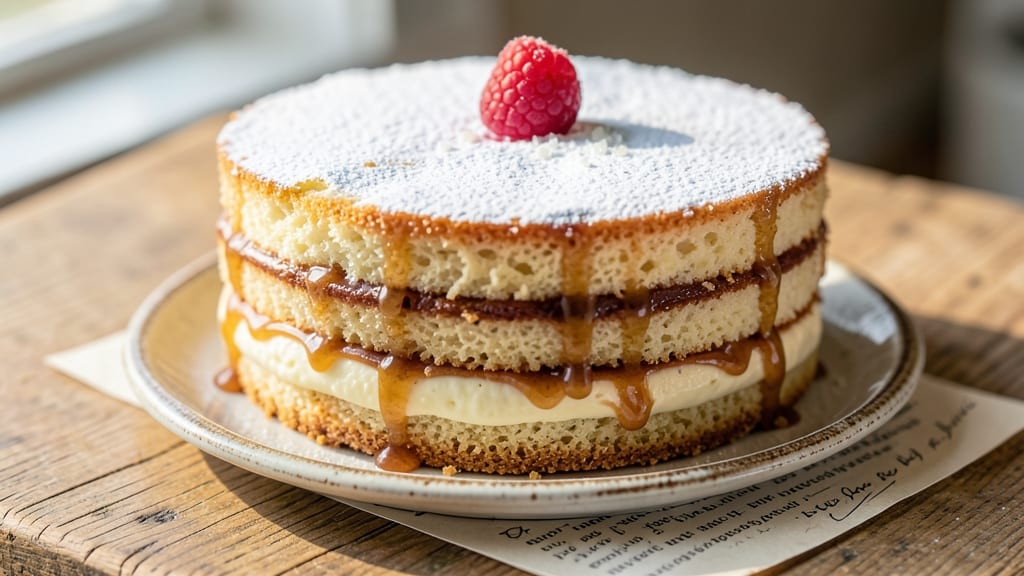
An 8-egg cake delivers that perfect balance of rich custard and delicate layers—no dense crumbs in sight. 💛 I remember my grandmother’s recipe journal had this one circled, with her note: "Eight eggs make it light, but don’t rush the baking." The secret lies in the eggs, which create both structure and moisture, while the butter and sugar create that signature tender crumb.
This recipe builds on that tradition with a foolproof method: whisking eggs and sugar until pale and fluffy, then gently folding in melted butter and flour. The result is a cake with light-as-air layers that practically melt in your mouth, topped with a velvety vanilla frosting that ties everything together.
The oven temperature and baking time are critical—too hot, and it’ll dry out; too cool, and it won’t set properly.
By the time it comes out of the oven, you’ll have a cake that’s rich yet tender, with a golden crust and layers so delicate they seem almost ethereal. The frosting isn’t just sweet—it’s buttery and smooth, cutting through the cake’s custardy richness.
Serve it with a dollop of whipped cream or a spoonful of fruit compote for that extra touch of elegance.
Perfect for special occasions or when you want to impress without spending hours in the kitchen. The ingredients are simple, but the technique ensures restaurant-quality results every time. Let’s get started—this cake is worth the effort.
Ingredients for 8 egg cake
Eight eggs and a few simple staples create this legendary light-as-air cake.
| Ingredient | Amount | Notes |
|---|---|---|
| Large Eggs 🥚 | 8 whole | Room temperature for best mixing |
| Granulated Sugar 🍚 | 2 cups | Superfine preferred for smooth texture |
| Unsalted Butter 🧈 | 1 ½ cups | Melted, full-fat for richness |
| All-Purpose Flour 🌾 | 2 cups | Sifted, plus extra for dusting |
| Vanilla Extract 🌸 | 2 tsp | Pure vanilla for authentic flavor |
| Baking Powder 🍞 | 1 tsp | Diamond Crystal preferred |
| Salt 🧂 | ½ tsp | Fine sea salt for balance |
| Vanilla Frosting 🍰 | 2 cups | Store-bought or homemade recipe |
| Heavy Whipping Cream 🥛 | ½ cup | Cold, for whipped cream garnish |
| Lemon Juice 🍋 | 1 tbsp | Freshly squeezed for brightness |
The eggs are the star here—room temperature is non-negotiable for proper emulsification. Grab the largest eggs available (they yield more volume), and if you're feeling fancy, Pasture-Raised eggs from Whole Foods add extra richness. The butter should be unsalted and full-fat—none of that low-fat nonsense. For the sugar, superfine dissolves faster if you're in a hurry, but regular granulated works too. The vanilla extract? Pure Madagascar bourbon if you can find it, but imitation is fine in a pinch. Sift your flour and baking powder together to avoid lumps—King Arthur flour is my go-to for consistent results.
No vanilla extract? Vanilla bean paste works beautifully, or scrape seeds from a pod into the batter. Running out of baking powder? Baking soda plus cream of tartar at a 1:2 ratio is a solid swap. The frosting can be store-bought (I won't judge), but homemade is where the magic happens—powdered sugar, softened butter, and vanilla whisked to fluffy perfection. For extra brightness, add a splash of lemon juice to the batter (like my grandmother did). The heavy whipping cream? Cold from the fridge whips up best—don't skip this step for the garnish.
This cake keeps beautifully for 3 days in an airtight container at room temperature, though it's best enjoyed fresh. The frosting? 1 week in the fridge, but trust me—it'll disappear faster than you think. For special occasions, I like to wrap individual slices in parchment and tie with ribbon. The secret to reheating? 30 seconds in the microwave with a damp paper towel—revives the layers perfectly. And if you're feeling extra, a dusting of powdered sugar or a sprinkle of turbinado sugar adds that bakery-fresh touch.
Why You'll Love This Recipe
- No Mixing Madness: I swear by this recipe because it’s more like folding than mixing—just eggs, sugar, butter, and flour whisked together until smooth. No sifting, no overworking, no stress. The buttercream frosting? Two ingredients: softened butter and powdered sugar. That’s it. Honestly, my 10-year-old could handle it.
- Buttery Vanilla Bliss: The flavor is what keeps me coming back—rich, tender crumb from the eggs and butter, with that vanilla punch cutting through like a warm hug. It’s not overly sweet; the sugar balances perfectly with the eggs’ natural richness. I’ll be real: I’ve made cakes with fewer eggs, but eight? That’s the difference between "good" and "I’ll take seconds."
- Breakfast or Dessert: Here’s what sold me—this cake works for any meal. Serve it plain with coffee for a weekend treat, or frost it with lemon glaze for brunch. My husband even sneaks slices for lunch when he thinks I’m not looking. (Between us, I don’t blame him.)
- Zero-Waste Wonder: Eight eggs mean leftovers that last—slice it, wrap it, and it stays fresh for days. And because it’s just pantry staples (no specialty ingredients), it’s my go-to for potlucks or last-minute gifts. Not the prettiest, but the taste makes up for it. Plus, the recipe scales easily—double it for a crowd, halve it for a small batch.
Step-by-step instructions for light-as-air layers with buttery vanilla frosting
Here's how to create a cloud-like cake with tender layers and rich frosting.
🍳 Step 1: Prepare the Cake Batter for Perfect Texture
Preheat your oven to 350°F and grease three 8-inch round cake pans with nonstick spray, then dust with flour. In a large mixing bowl, combine the 2 cups granulated sugar, 2 cups all-purpose flour, 1 tsp baking powder, and 0.5 tsp salt. Sift the dry ingredients together to eliminate lumps—this ensures a smooth, even texture throughout the cake.
In a separate heatproof bowl, melt the 1.5 cups unsalted butter over a double boiler or in short bursts in the microwave. Let it cool slightly to 110°F—it should be warm but not hot to the touch. This temperature is crucial; too hot and the eggs will scramble, ruining the delicate crumb.
👨🍳 Step 2: Whisk Eggs and Sugar for Maximum Fluffiness
In a separate bowl, beat the 8 whole large eggs on medium speed until they're pale and slightly thickened, about 3-4 minutes. Gradually add the 2 cups granulated sugar while continuing to beat on high speed for another 5-6 minutes. You're looking for a ribbon stage—when you lift the whisk, the batter should form ribbons that hold their shape for a few seconds before dissolving. This step creates the airy texture that makes this cake so light.
Remove the bowl from the mixer and gently fold in the melted butter, 2 tsp vanilla extract, and 1 tbsp lemon juice using a spatula. Be careful not to overmix—just until everything is combined. The lemon juice brightens the flavor while keeping the cake tender. The batter should be smooth and glossy with no streaks of flour remaining.
🥘 Step 3: Layer and Bake for Even Rising
Divide the batter evenly among the three prepared cake pans. Tap each pan gently on the counter to release any air bubbles that may have formed. Bake for 25-30 minutes or until a toothpick inserted in the center comes out clean and the tops spring back when touched. Rotate the pans halfway through baking for even browning—this prevents one side from getting too dark while the other remains pale.
Let the cakes cool in their pans for 10 minutes before transferring to a wire rack to cool completely. This gradual cooling prevents cracking. While they cool, prepare the 2 cups vanilla frosting according to package instructions—it should be smooth and spreadable but not too soft.
🍽️ Step 4: Assemble with Whipped Cream Garnish
Once completely cool, level the tops of the cakes if needed using a serrated knife. Place the first layer on a cake stand or plate, then spread a thin layer of frosting on top. Repeat with the remaining two layers, frosting each one before stacking. For the final layer, frost the entire top and sides of the cake, creating a smooth finish.
In a chilled bowl, whip the 0.5 cup heavy whipping cream to stiff peaks. Pipe or spread dollops of whipped cream around the edges of the cake for an elegant garnish. The contrast between the dense frosting and light whipped cream adds visual appeal while keeping the cake's signature lightness.
Pro Tips For Making 8 Egg Cake
- WHISK EGGS COLD: Start with eggs straight from the fridge—room temperature makes them foam like a dream, but cold eggs hold their structure better in an 8-egg batter. I used to let them sit out for hours, and the cake turned dense; now I just give them 10 minutes in warm water (yes, even if you're impatient like me).
- MELT BUTTER SLOW: Unsalted butter burns faster than you think. Melt it over low heat in a heavy pan, stirring constantly, until it’s just liquid gold—no brown spots. Once it’s smooth, let it cool to room temp before mixing; cold butter in warm batter causes weird lumps that no amount of whisking fixes.
- SIFT FLOUR FIRST: Skip the measuring cups—sift that flour directly into your bowl. It aerates the batter and prevents dense spots. I learned this the hard way after a cake came out like a brick; now I weigh it (1 cup = 125g) and sift twice if it’s lumpy.
- BAKE IN TWO ROUNDS: An 8-egg cake needs patience. Bake the first 15 minutes at 350°F (175°C), then drop to 325°F (160°C) for the rest—this prevents a cracked top. If the edges brown too fast, tent with foil; overbaking turns it dry, and no one wants cake that crumbles like a sad soufflé.
Wine and beer pairings for these flavors
Sweet Wine Pairings
This cake’s rich custard layers and buttery vanilla frosting call for wines with matching sweetness and acidity to balance its richness. A German Riesling from the Mosel region—like Dr. Loosen Blue Slate—is my go-to.
Its bright citrus notes and honeyed finish complement the cake’s vanilla while cutting through the butter. Serve it slightly chilled (50-55°F) to enhance its crispness against the cake’s warmth. 🍷
Creamy Dessert Wines
For a true indulgence, try a Moscato d’Asti from Piedmont, Italy. This lightly fizzy, semi-sweet wine has peach and apricot flavors that mirror the cake’s custardy texture. Its effervescence cleanses your palate between bites, making each slice feel like a luxurious treat.
I keep a bottle in my fridge year-round—it’s the perfect dessert companion for any occasion.
Beer Options
If wine isn’t your thing, a Belgian Dubbel like Westmalle Trappist offers a bold, malty contrast. The caramel and dark fruit notes stand up to the cake’s richness without overpowering it.
For a lighter option, try a honey ale—its floral sweetness pairs beautifully with the vanilla frosting. Just avoid heavy stouts or IPAs, which can clash with the cake’s delicate layers.
Coffee Pairing
For a classic pairing, serve this cake with a light roast espresso or cappuccino. The coffee’s bitterness balances the cake’s sweetness, while its creamy foam echoes the whipped cream garnish.
I like to brew a small pot of Lavazza Super Crema and keep it warm in a thermos—it’s the perfect way to end a meal without overwhelming the cake’s delicate flavors.
Seasonal Adaptations
In summer, swap the frosting for a passionfruit curd and pair with a Sparkling Gewürztraminer—its lychee and grapefruit notes refresh the palate. For winter, add a spiced rum glaze and serve with a Port wine to enhance the cake’s warmth.
The key is matching the wine’s sweetness and acidity to the cake’s evolving flavors. 🍇
Nutrition facts
Frequently asked questions
Why does this recipe use so many eggs?
The 8 eggs are the secret to this cake's signature light-as-air texture. Eggs act as both a leavening agent (creating lift) and a moisture binder (keeping the cake tender). The high egg-to-flour ratio produces that signature custardy, almost soufflé-like quality that makes this cake so special. It's what gives the layers their delicate, melt-in-your-mouth quality.
Can I make this cake in a single layer instead of three?
For a single 10-inch cake, reduce baking time to 35-40 minutes at 350°F. The batter quantity stays the same, but you'll need a larger pan. Keep an eye on it—the center should be just set when a toothpick comes out clean. The texture will be slightly denser than the layered version but still delicious.
What if my cake turns out dense instead of light? Overmixing the batter or not cooling the melted butter properly are the most common culprits.
How do I store leftovers without drying out the cake?
Wrap individual slices tightly in plastic wrap, then place them in an airtight container. For short-term storage (2 days), keep at room temperature. For longer storage (up to 5 days), refrigerate. To revive stale slices, warm them in the microwave for 10-15 seconds with a damp paper towel covering the top.
Can I substitute butter for oil?
I don't recommend it for this recipe. The butter adds both flavor and moisture that oil can't replicate. If you must substitute, use an equal amount of melted butter-flavored shortening, but expect slightly less rich flavor. The cake will still be tender, but the signature buttery taste will be diminished. For best results, stick with the butter!